Part ofHollywood's Biggest Feuds
The Beatles Did Not Break Up in a Meeting. It Ended in the High Court.
A partnership deed, a receiver appointed by a judge in March 1971, and a settlement that took until 1975. The break-up of the Beatles is one of the few in pop music with a case file.
PUBLIC RECORDCentral claim classification. Reported and disputed material is labelled in the text.
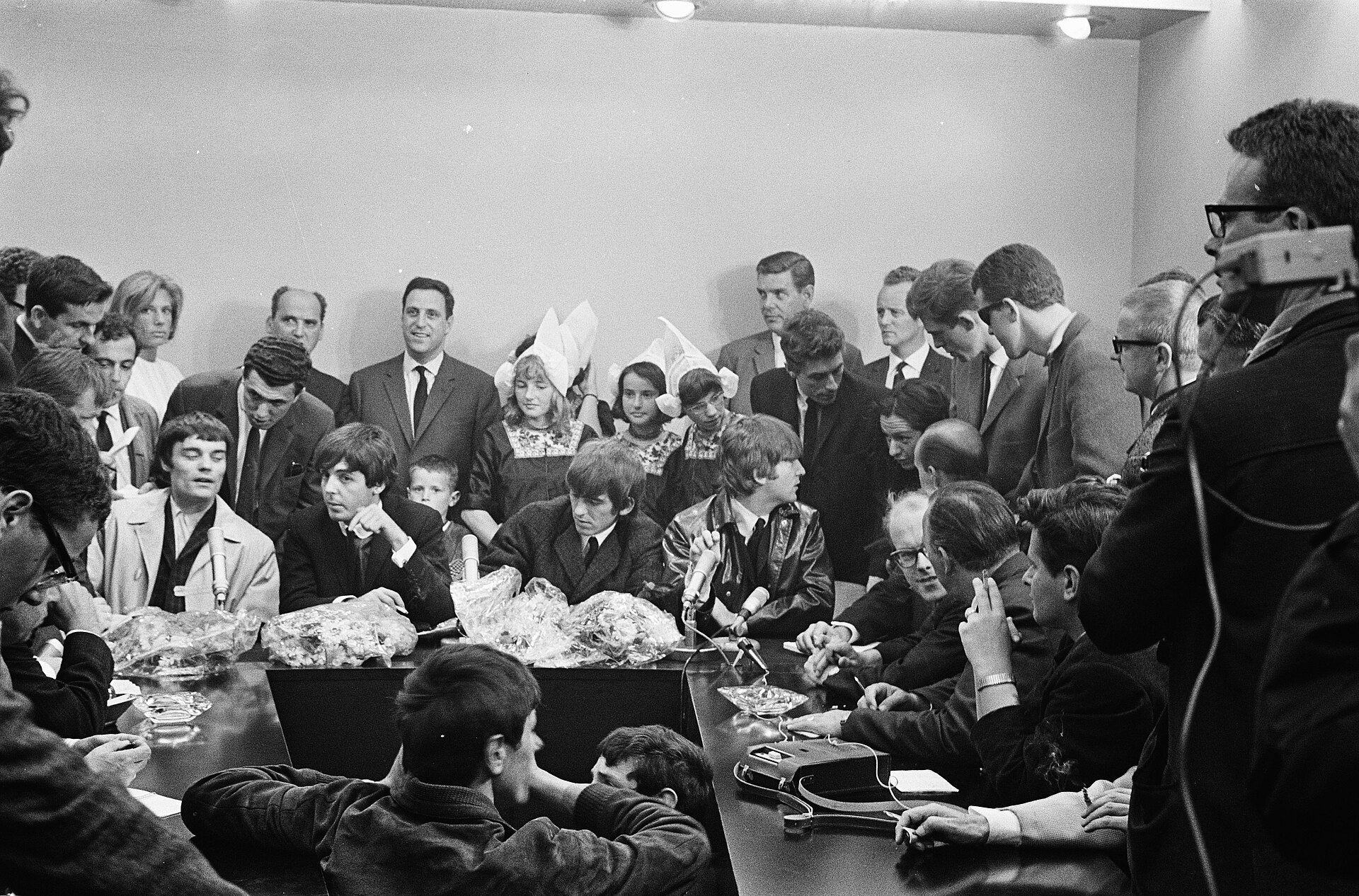 Harry Pot for Anefo / CC0 1.0 (public domain dedication)
What actually happened
There was no final argument in a studio, and no press conference. The Beatles were a legally constituted partnership — Beatles & Co, formed in 1967 — and partnerships in English law do not simply stop existing because the partners have stopped speaking. When the four of them could no longer agree on who managed their money, one of them had to ask a judge to dissolve it. That is what actually ended the Beatles, and it is why the ending has a date, a court and a written judgment attached to it.
The order of events is the part almost everyone gets wrong. Lennon quit first, privately. McCartney announced it first, publicly. And the last album released was not the last album recorded.
Dates and documents
August 1967
Manager Brian Epstein dies. The group has no replacement, and no agreed process for choosing one.
1967
The four sign a partnership agreement forming Beatles & Co, which pools their earnings for a fixed term.
Early 1969
Lennon, Harrison and Starr want Allen Klein to manage the group's business. McCartney wants Lee and John Eastman — his fiancée's father and brother. The vote is three to one, and it never changes.
20 August 1969
The last day all four Beatles are in a recording studio together, finishing Abbey Road.
20 September 1969
Lennon tells the others he is leaving the group. He agrees to keep it quiet while the business negotiations continue.
10 April 1970
McCartney's solo album is issued with a self-interview press release in which he says he does not foresee working with the Beatles again. The world reads it as the break-up announcement.
8 May 1970
Let It Be is released — recorded in January 1969, before Abbey Road, and shelved in the interim.
31 December 1970
McCartney files suit in the High Court in London against Lennon, Harrison and Starr, asking for the partnership to be dissolved and a receiver appointed.
12 March 1971
The court appoints a receiver over the partnership's affairs. McCartney wins.
1973
The other three end their management arrangement with Klein. Litigation between Klein and the group continues for years afterwards.
9 January 1975
The partnership is formally dissolved. Four years and nine days after the writ.
What is confirmed
- PUBLIC RECORD: McCartney issued proceedings in the High Court on 31 December 1970 seeking dissolution of the Beatles partnership.
- PUBLIC RECORD: the court appointed a receiver in March 1971, and the partnership was formally dissolved in January 1975.
- CONFIRMED: Lennon told the group he was leaving in September 1969; all four have described that meeting in later interviews.
- CONFIRMED: the management dispute split three to one, with McCartney alone opposing Allen Klein.
- PUBLIC RECORD: Abbey Road was recorded after Let It Be but released before it.
Why it had to be a lawsuit
This is the detail that turns a rock-history anecdote into a legal story. Under the partnership deed, the four Beatles shared income even on solo work, and no partner could unilaterally walk away. McCartney's objection to Klein was therefore not a matter of taste; it was an objection to a man he could not vote out and could not escape. The suit was not filed to punish the other three. It was the only mechanism available to stop his earnings flowing into an entity managed by someone he did not trust.
The other three defended it, and lost. In later interviews Harrison, Starr and — eventually — Lennon acknowledged that the outcome had protected all four of them, because the receiver preserved the catalogue income while the management dispute was untangled. That reassessment is on the record in their own words; it is not a posthumous kindness invented by biographers.
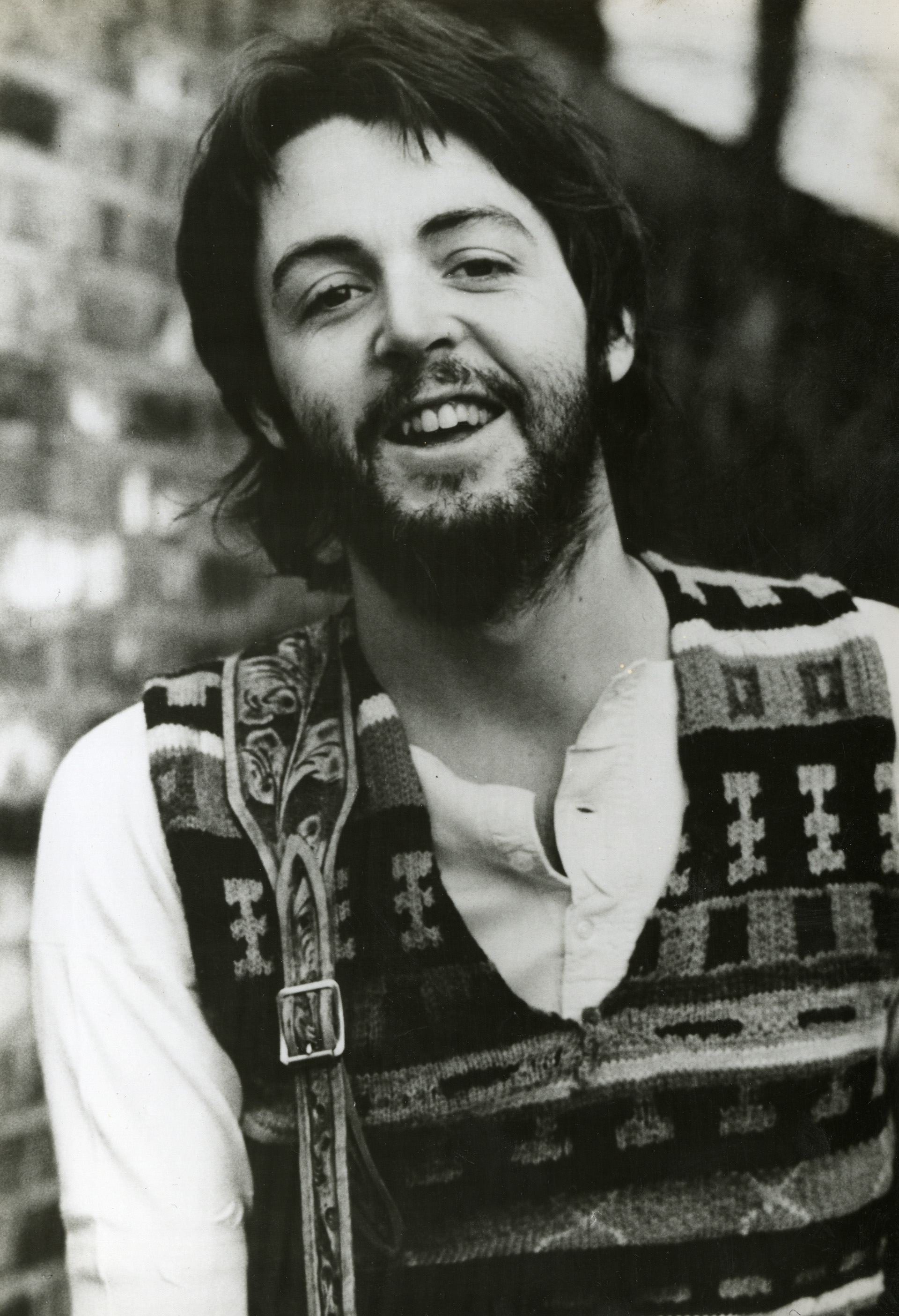
What they told the public
“Q: Are you planning a new album or single with the Beatles? A: No.”
Lennon's public position was that he had quit first and had been talked into silence, and he said so repeatedly from 1970 onwards. McCartney's position was that he had announced a fact the others had already decided. Both accounts are compatible. The disagreement was never about whether the group had ended; it was about who was allowed to say so.
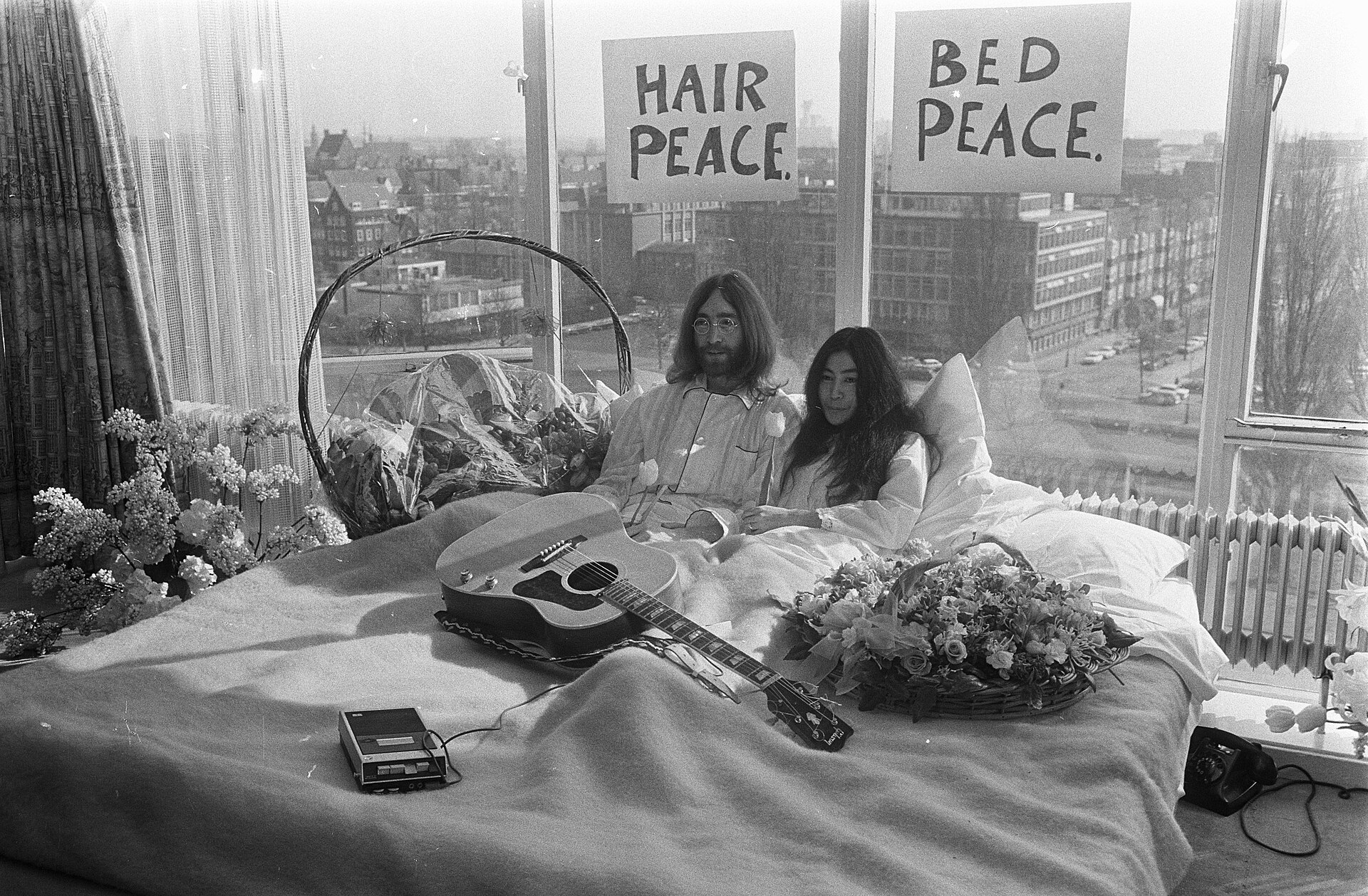 Continue reading · What happened next?They Spent Their Honeymoon in a Hotel Bed and Invited the World's Press InAmsterdam, March 1969: John Lennon and Yoko Ono married in Gibraltar, checked into the Hilton, and let reporters into the room every day for a week. Within eighteen months the Beatles were in the High Court.
What remains disputed
Two familiar claims do not survive contact with the record. The first is that Yoko Ono broke up the Beatles: the surviving members rejected that framing in interviews for the rest of their lives, and the documented rupture is a management vote in which she had no part. Forgotten Frame records it as DISPUTED. The second is that the Let It Be sessions were uniformly miserable. The tapes reissued in the 2020s show long stretches of ordinary, funny studio work alongside the arguments — which is a correction to the legend, not a denial that the arguments happened.
What happened next
All four released solo albums within eighteen months of the writ, and three of the four scored number one singles. Lennon was murdered in New York in December 1980. Harrison died in 2001. McCartney and Starr have both continued to record and tour, and appeared on each other's records repeatedly in the decades since. The catalogue that the receiver was appointed to protect has never gone out of print.
In 2023 a final Beatles recording, built around a Lennon demo, was released with the participation of McCartney and Starr and the estates of Lennon and Harrison — fifty-three years after the writ that dissolved them. The partnership ended in court; the collaboration, on the evidence, did not.
The money at the centre of it
It is worth being concrete about what the partners were arguing over, because 'creative differences' is the phrase that has buried this story for fifty years. Beatles & Co pooled the four members' earnings from records, publishing royalties routed through their companies, film income and Apple Corps, and it did so under an agreement running to the end of the 1970s. A partner who left the group did not leave the partnership. Solo income earned by one Beatle would still, in principle, flow into the same pot, managed by the same manager, subject to the same three-to-one vote.
Apple Corps itself had been set up in 1968 partly as a tax structure and partly as a genuine attempt to run a label, a film arm and a boutique on the group's own terms. By 1969 it was losing money at a rate that alarmed all four of them; that shared alarm is what opened the door to Allen Klein, who had a documented record of auditing labels and recovering unpaid royalties for his clients. Three of them saw a fixer. McCartney saw someone he had not chosen and could not remove.
There was also the publishing. Northern Songs, the company holding the Lennon–McCartney catalogue, was sold to ATV in 1969 after the two songwriters failed to secure control of it themselves. That defeat happened months before the writ and coloured everything after it: the two men who wrote the songs no longer owned the right to license them, and the vehicle that still bound them together was one neither of them controlled either.
How the court dealt with it
English partnership law gave the court a narrow set of options. A partnership can be dissolved by agreement, by expiry of its term, or by order of the court where it is 'just and equitable' to do so — and the appointment of a receiver is the interim step that protects the assets while the question is decided. McCartney's case was that the partnership could not function when the partners could not agree on who received and disbursed their money, and that the accounts had not been properly produced. The receiver appointed in March 1971 took control of the income while that was sorted out.
The point that gets lost is that a receivership is not a punishment. It is a holding position. Between 1971 and the 1975 settlement, the Beatles' income was administered by an officer of the court rather than by any of the four or by their managers — which is precisely why the catalogue money survived a period in which the four principals were, by their own later accounts, barely speaking.
Image record & sources
- Photographer
- Harry Pot for Anefo
- Date made
- 5 June 1964
- Collection
- Nationaal Archief (Netherlands) via Wikimedia Commons
- Licence
- CC0 1.0 (public domain dedication)
- Attribution
- Harry Pot / Anefo, Nationaal Archief. CC0, via Wikimedia Commons.
- File checked
- Licence page for this exact file — verified 30 August 2026
References
Continue on these topics
Tags
About the author
Forgotten Frame Editorial Desk
Editorial team
The Forgotten Frame editorial desk researches photographic archives, checks the licence of every individual file we publish, and writes the verified context around each picture.