Paris Agreed to Tear the Eiffel Tower Down
A part-built tower over the rooftops of 1888 Paris, and the contract that said it would all come down again in 1909.
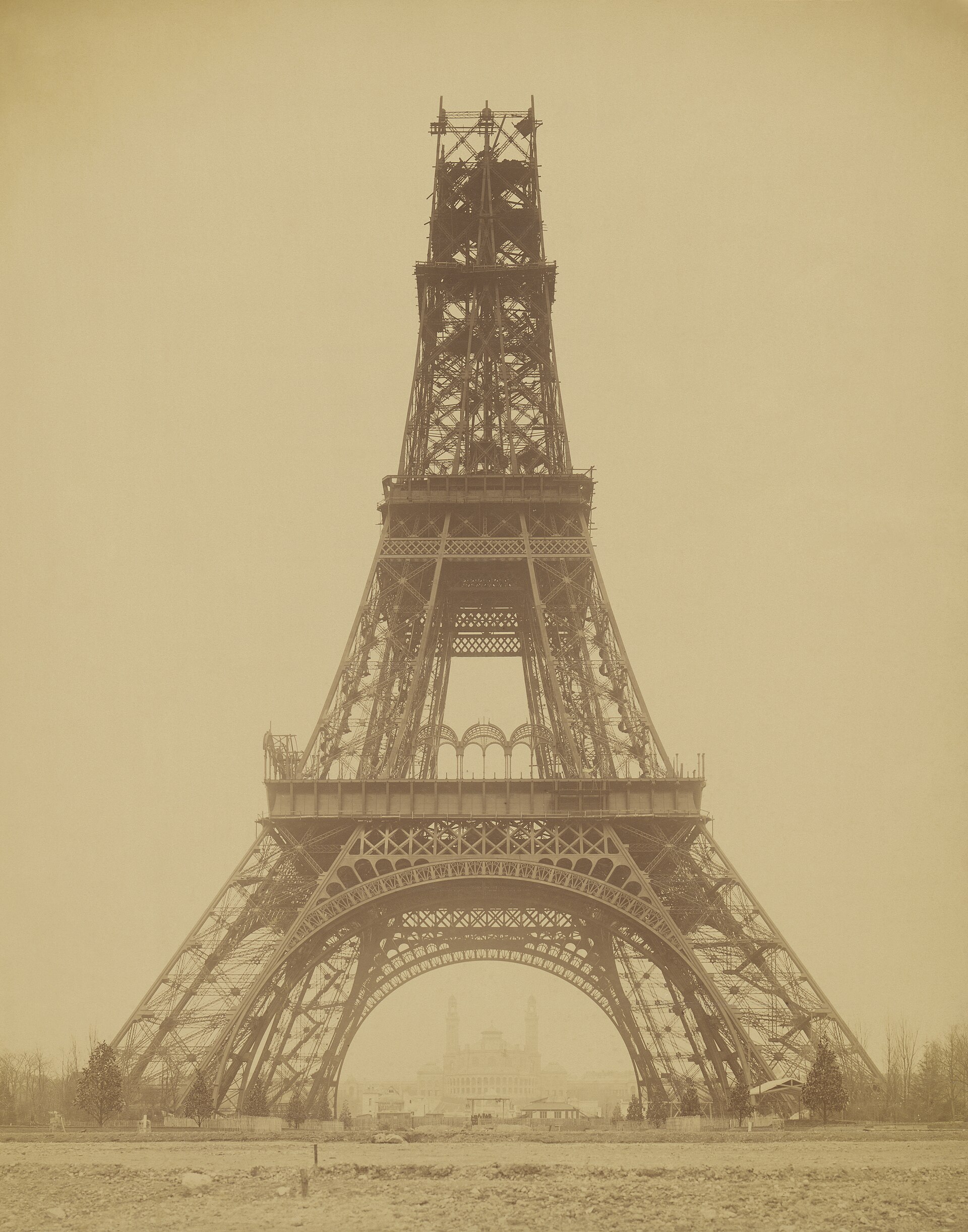 Louis-Émile Durandelle / Public domain
The tower was built as the entrance arch to the 1889 Exposition Universelle, marking a century since the French Revolution. Gustave Eiffel's company financed most of it in exchange for the right to operate it commercially — and the agreement gave the structure a working life of twenty years, after which ownership passed to the City of Paris, which was free to remove it.
Eiffel hired Louis-Émile Durandelle, an architectural photographer, to record the assembly. The result is a sequence of plates showing four masonry-footed legs climbing, unjoined, above the roofline — a shape that looked to many Parisians like a mistake in progress.
What the half-built photographs actually show
The construction plates are strange to modern eyes because they show a shape with no obvious future. Four separate iron legs rise at an angle from four masonry footings, leaning towards a meeting point that does not exist yet. Parisians walking past in 1887 and 1888 were not looking at a landmark under construction; they were looking at four unconnected metal ramps pointing at the sky.
The engineering that made it possible is mostly invisible in the pictures. The parts were cut, drilled and pre-assembled at Eiffel's works at Levallois-Perret and brought to the Champ de Mars ready to bolt and rivet, in an era when most large structures were fabricated on site. The iron came in thousands of individual pieces made to drawings, held together in the end by millions of rivets. Assembly took about two years and two months — fast for the period, and fast even now.
The artists' protest
In February 1887 a group of writers and artists published an open letter denouncing the “useless and monstrous” tower and the “odious column of bolted sheet metal” it would impose on Paris. Signatories included Guy de Maupassant and Charles Garnier, architect of the Paris Opera.
The objection was not only aesthetic. Part of the argument was that Paris was a city of stone and proportion, and that an industrial exhibition piece had no business permanently overshadowing it. Read now, the protest is a useful reminder that almost every structure we treat as inevitable was once something a serious person argued should not be allowed to stand.
28 January 1887
Excavation begins on the Champ de Mars.
February 1887
The 'Protest against the Tower of Monsieur Eiffel' is published in Le Temps.
31 March 1889
The tower is completed; Eiffel climbs it to raise the French flag.
1898 onwards
The tower is used for radio-telegraphy experiments, giving it a purpose beyond the fair.
1909
The twenty-year concession expires — and the tower survives, kept for its antennas.
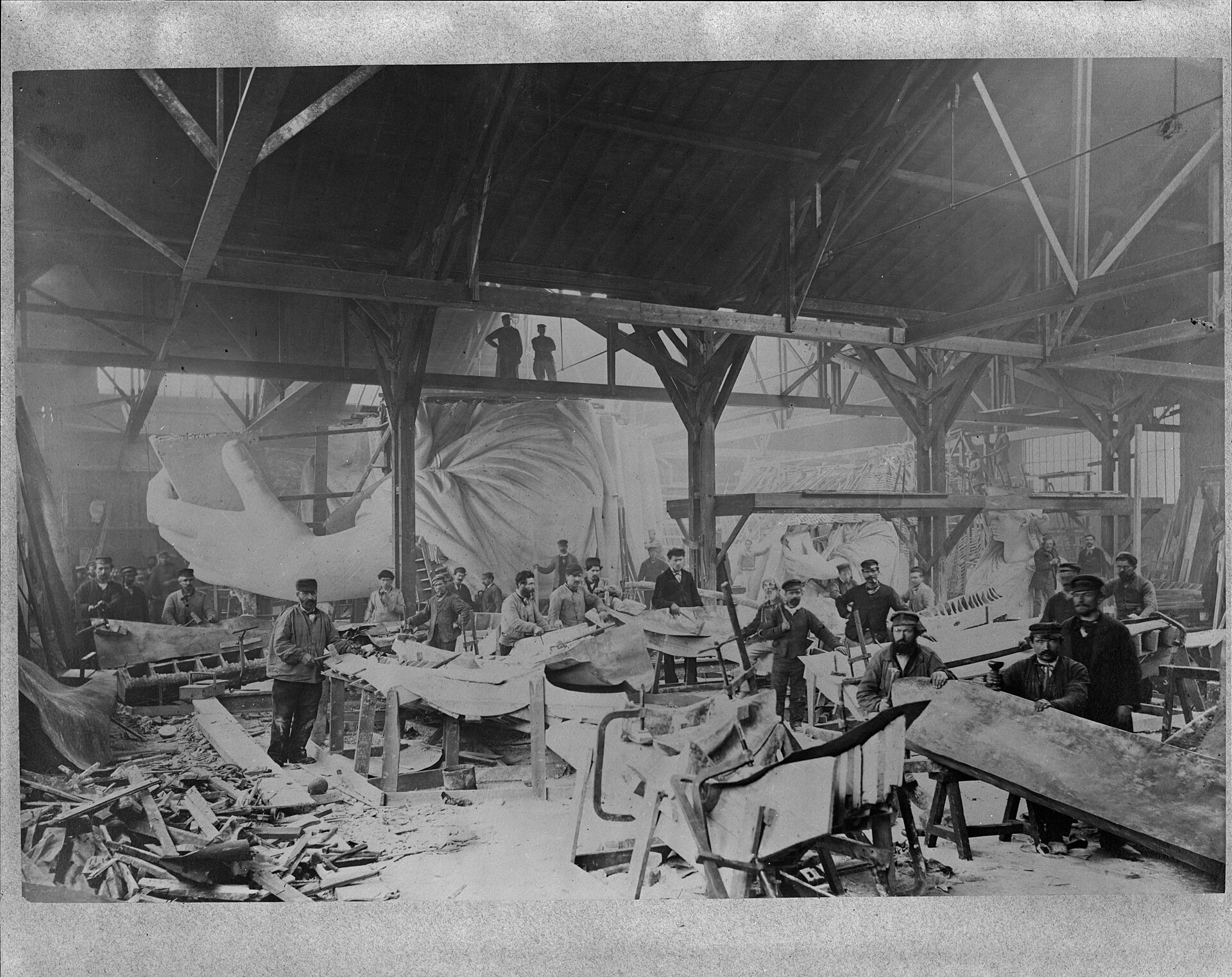 Continue reading · What happened next?The Statue of Liberty Was Built in a Paris NeighbourhoodBefore it stood in New York Harbor, the statue filled a workshop off the rue de Chazelles — a hand the size of a room, a head that tourists paid to walk into.
Saved by radio
What preserved it was not affection but utility. Eiffel promoted the structure as a scientific instrument, and from 1898 onwards it was used for radio-telegraphy experiments. By the time the concession lapsed, a tall permanent antenna over Paris was militarily and scientifically valuable. The demolition never happened.
This is the part of the story that gets flattened into “Paris almost tore it down.” The tower was not saved by public affection reversing itself; it was saved because a very tall iron mast turned out to be the best radio aerial in France at the moment radio became strategically important. Eiffel spent years actively manufacturing reasons to keep it — meteorological instruments, aerodynamic experiments, wireless telegraphy — because he understood that his contract, not his critics, was the real threat.
The photographs, and why they are free
Durandelle's plates are now in the public domain, which is why the half-built tower is one of the most widely reproduced construction sequences in photographic history. The tower itself is a slightly different matter: the structure is out of copyright, but the illuminated night display added much later is treated as a separate protected work, which is why picture desks are careful about which version of the tower they publish.
Image record & sources
- Photographer
- Louis-Émile Durandelle
- Date made
- 1888
- Collection
- Wikimedia Commons
- Licence
- Public domain
- Attribution
- Louis-Émile Durandelle. Public domain.
- File checked
- Licence page for this exact file — verified 29 August 2026
References
Tags
About the author
Forgotten Frame Editorial Desk
Editorial team
The Forgotten Frame editorial desk researches photographic archives, checks the licence of every individual file we publish, and writes the verified context around each picture.