Part ofThe Photo That Changed Everything
Two Girls, a Borrowed Camera, and the Fairy Photographs That Convinced Sherlock Holmes's Creator
Five photographs, cardboard cut-outs, hatpins, and sixty-six years of a story that refused to end.
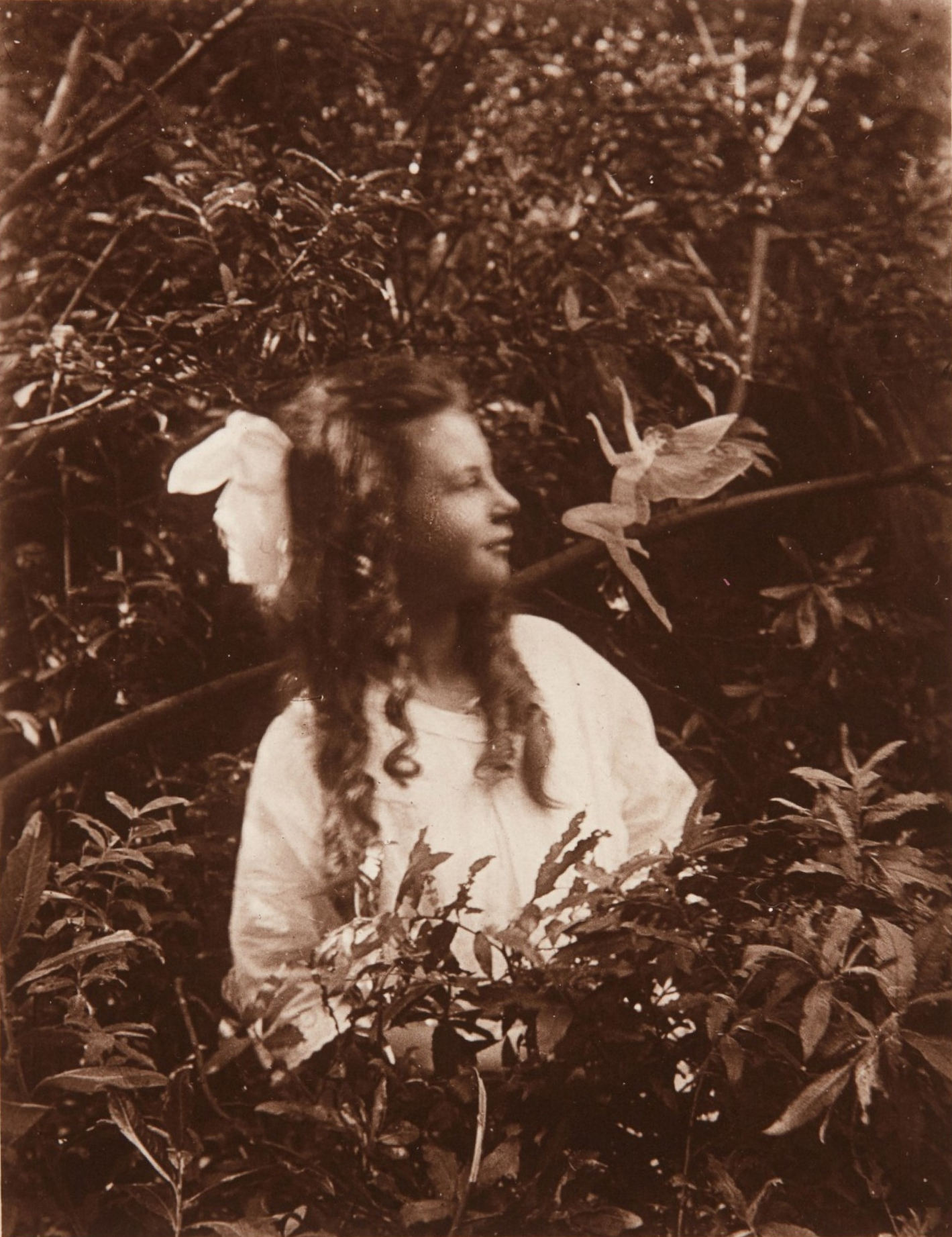 Elsie Wright / Public domain
In 1917, in the village of Cottingley in West Yorkshire, sixteen-year-old Elsie Wright borrowed her father's quarter-plate camera and went down to the beck with her nine-year-old cousin, Frances Griffiths. They came back with a photograph of Frances and a group of small winged figures.
Elsie's father developed the plate, decided the figures were paper, and dismissed it. Her mother did not. Three years later the pictures reached the theosophist Edward Gardner and, through him, Arthur Conan Doyle.
The girls were better placed than anyone realised
Elsie was not a naive child with a snapshot camera. She had worked briefly in a photographer's shop, where part of the job involved touching up prints, and she could draw well. The figures in the pictures were adapted from published illustrations of the period rather than invented from nothing. Everything needed for the hoax — the drawing ability, the darkroom familiarity, the borrowed plate camera — was already in the house.
It is also worth remembering how the pictures were meant to function. They were made to settle a domestic argument, not to fool the country. The cousins had been told off for coming home wet from the beck; the photograph was the answer to why they kept going there.
Why Conan Doyle believed
Doyle was writing an article on fairies for The Strand Magazine and had recently lost family members in the First World War; he was deeply committed to spiritualism. He submitted the plates to Kodak, whose technicians said they showed no evidence of double exposure but declined to certify that the subject was real.
That distinction is the whole affair in miniature. The technical examination answered a narrow question — had the negative been manipulated after exposure? — and the answer was no, because nothing had been done to the negative. The figures were physically present in front of the lens, held up on hatpins. A test designed to catch darkroom fakery cannot detect an object that was really there.
Doyle published anyway, in the Christmas 1920 issue of The Strand, treating the photographs as strong evidence. The magazine sold out.
July 1917
Elsie Wright and Frances Griffiths make the first two photographs.
December 1920
The Strand Magazine publishes them with Conan Doyle's article.
1921
A final three photographs are produced during a supervised visit.
1966
Elsie, interviewed decades later, says the pictures were of figments of their imagination.
1983
Both cousins tell The Unexplained magazine that the fairies were cut-outs held up with hatpins.
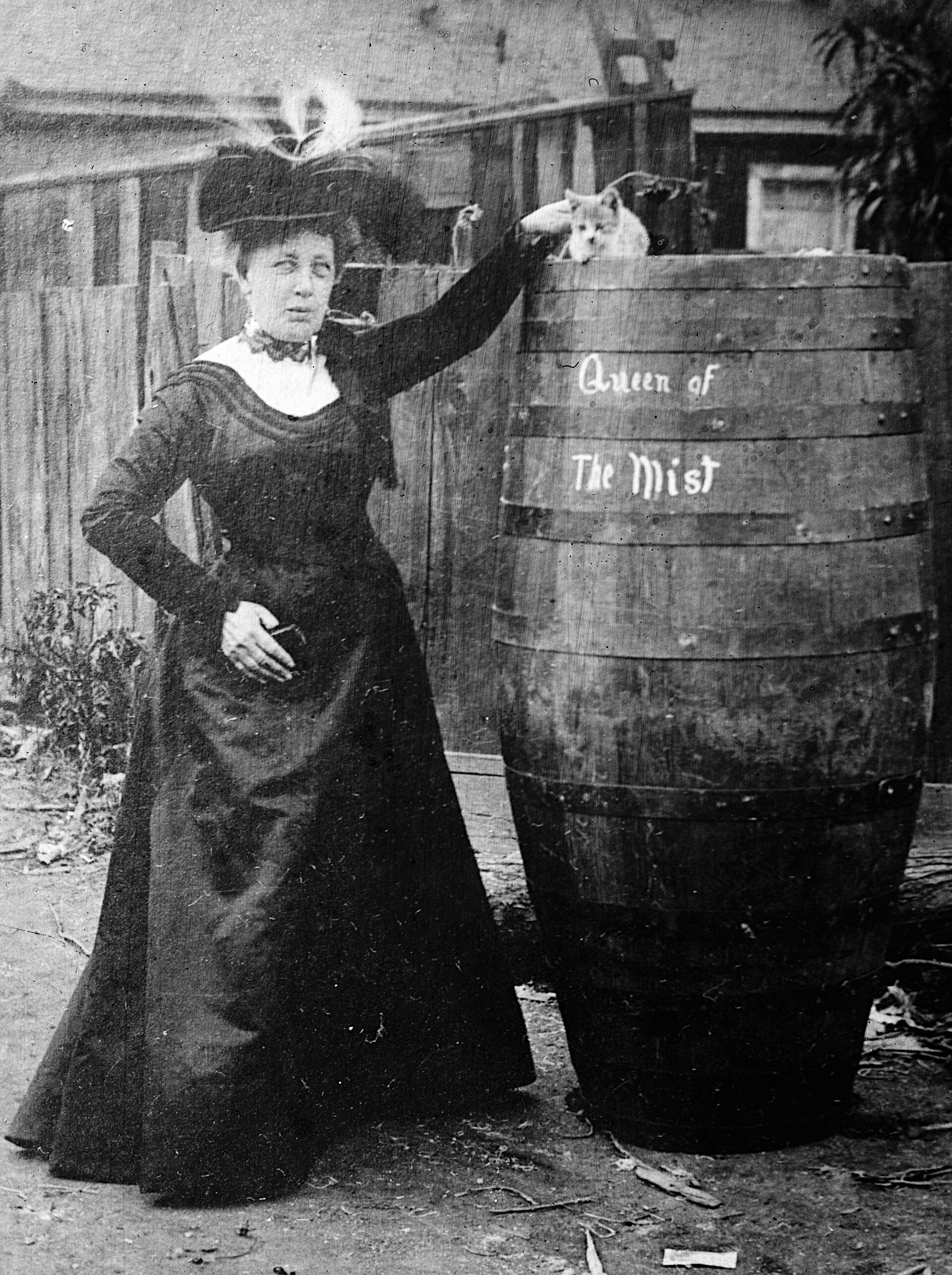 Continue reading · What happened next?She Went Over Niagara Falls in a Barrel on Her 63rd BirthdayAnnie Edson Taylor was a widowed schoolteacher who calculated that surviving the Horseshoe Falls would make her rich. She survived. It did not.
The confession, and the caveat
In 1983 Elsie and Frances admitted the figures were drawings — copied and adapted from illustrations in Princess Mary's Gift Book (1914) — propped up with hatpins. Elsie said all five were faked. Frances maintained that the fifth photograph was genuine, and that they really had seen fairies at the beck.
“I never even thought of it as being a fraud — it was just Elsie and I having a bit of fun.”
Neither woman ever presented herself as a fraudster with a plan. Both described being carried along: a joke that adults took seriously, then a famous author took seriously, then a nation took seriously, until admitting it had become impossible without humiliating people they liked. That is a more useful explanation of how hoaxes survive than any account involving clever deception.
What the case is actually evidence of
Cottingley is usually filed under gullibility, which lets everyone off too lightly. What it documents is a specific failure mode that still operates: an image is tested for the kind of manipulation the examiner knows how to detect, receives a narrow technical clearance, and is then reported as verified. A century later the technology has changed and the sequence has not.
The original prints, cameras and plates are held by the National Science and Media Museum in Bradford. The photographs themselves have passed into the public domain, which is why they can be reproduced here in full.
Image record & sources
- Photographer
- Elsie Wright
- Date made
- 1917–1920
- Collection
- Wikimedia Commons
- Licence
- Public domain
- Attribution
- Elsie Wright. Public domain.
- File checked
- Licence page for this exact file — verified 29 August 2026
References
Continue on these topics
Tags
About the author
Forgotten Frame Editorial Desk
Editorial team
The Forgotten Frame editorial desk researches photographic archives, checks the licence of every individual file we publish, and writes the verified context around each picture.