Part ofThe Photo That Changed Everything
It Took Almost 90 Years to Find Lincoln in This Photograph
A blurred head in a sea of hats, identified only when someone finally looked at the negative closely enough.
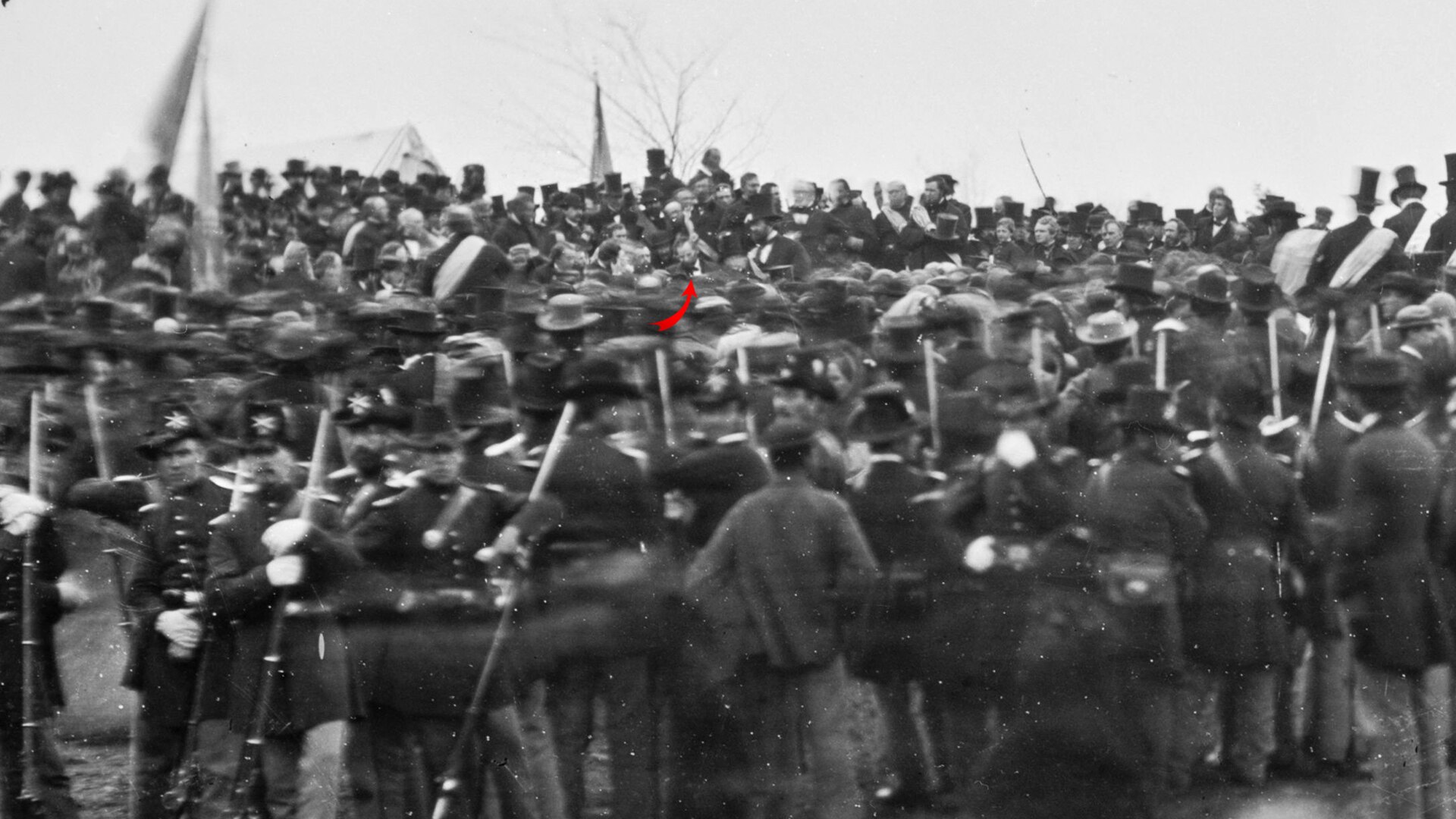 Attributed to Mathew Brady's studio / Public domain
The Gettysburg Address lasted about two minutes. Wet-plate photography of the period needed careful setup, and the photographers present were still preparing when Lincoln finished speaking. No known photograph shows him delivering it.
What does survive are crowd plates made around the ceremony on 19 November 1863 — dense fields of hats and shoulders in which nobody looked for a face for decades.
Why the camera missed the speech
The failure was technical, not careless. Wet-plate photography required the photographer to coat a glass plate with collodion, sensitise it in a silver bath, expose it while still wet and develop it within minutes, all from a portable darkroom. Setting up a single exposure took time, and the plate had to be used almost immediately.
The programme that day was built around Edward Everett, who spoke for roughly two hours. Lincoln's remarks were a short dedicatory addition at the end. By any professional judgement of the morning, the long oration was the event and the president's two minutes were a formality — and the equipment simply could not be turned around fast enough to catch a formality.
The archivist who found him
In 1952 Josephine Cobb, an archivist at the National Archives, examined an enlargement of one plate and identified Lincoln: hatless, seated, slightly bowed, surrounded by dignitaries and a military escort. The identification was made by working outwards from known figures beside him rather than from the face alone.
The method is worth spelling out, because it is what separates an identification from a guess. At this magnification the face is a few grains of emulsion and proves nothing on its own. What carries the argument is everything around it: the known seating arrangement on the platform, recognisable figures whose appearance is documented elsewhere, the military escort, the direction the crowd is facing. The face is confirmed by its context, not the other way round.
Later researchers have proposed additional identifications in the same and related plates, and some remain contested. That is normal in photo forensics: an identification is only as strong as the corroborating detail around it.
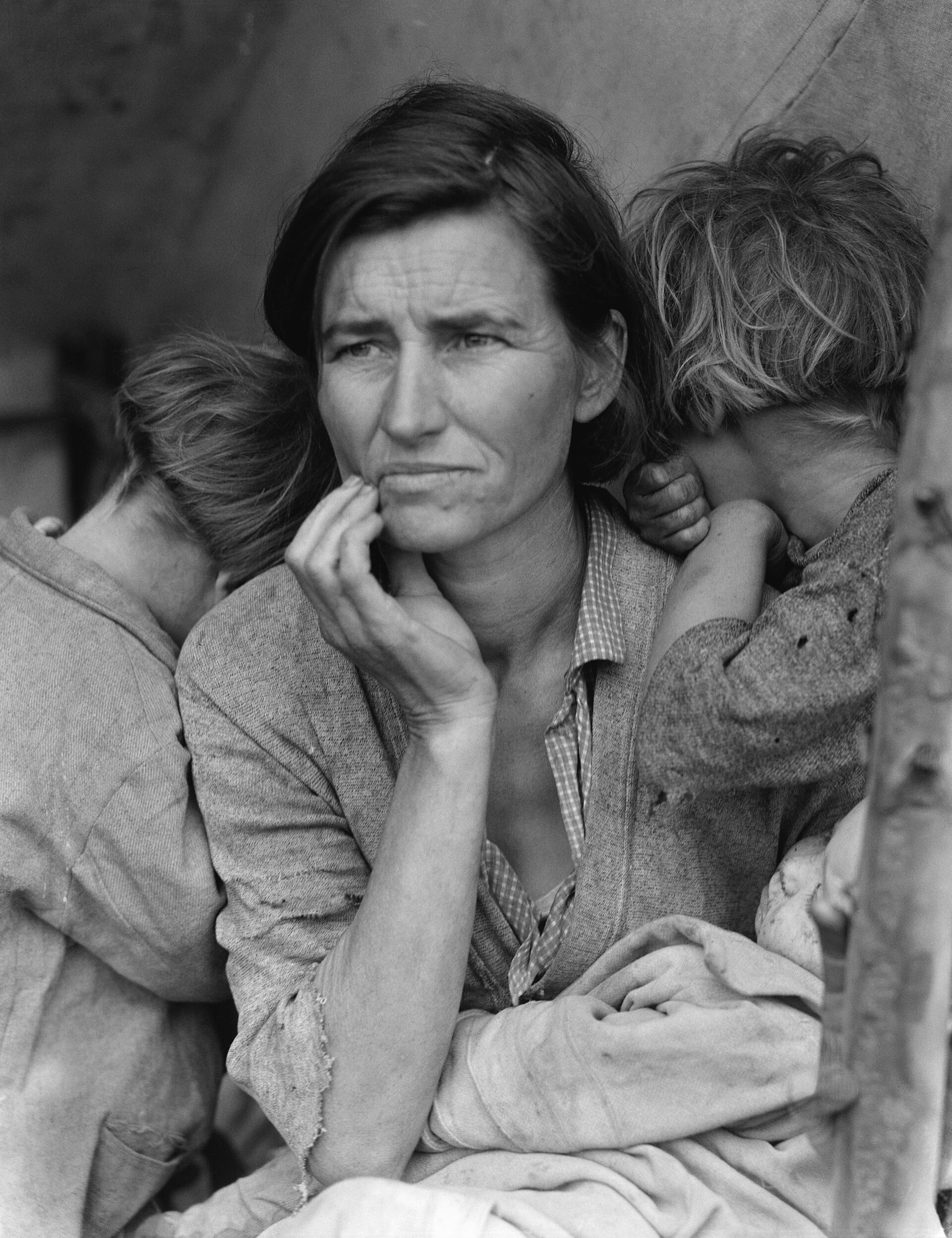 Continue reading · What happened next?The Most Famous Photograph of the Depression Took Ten Minutes to MakeDorothea Lange stopped at a pea-pickers' camp, shot five frames and drove on. The woman in the picture spent the rest of her life objecting to how it was used.
- Edward Everett spoke for roughly two hours before Lincoln's remarks.
- Five manuscript copies of the address in Lincoln's hand survive, and their wording differs.
- The plate is held by the National Archives as record 529085 and is in the public domain.
- Digital scanning has since made high-resolution examination possible for anyone, not just archivists.
What is still argued about
Claims of further sightings in the Gettysburg plates surface periodically, some of them made with high-resolution scans and careful reasoning. Not all of them are accepted, and a few identifications once treated as settled have been revised.
Forgotten Frame's position on cases like this is to report the identification that the holding institution records, name the researcher who made it, and label anything further as proposed rather than proven. A photograph is evidence; a reading of a photograph is an argument, and arguments can be wrong.
Why it still matters
The lesson is not that the photograph was hiding a secret. It is that archives are full of images nobody has examined closely, and that discovery is often a matter of resolution and patience rather than luck.
Image record & sources
- Photographer
- Attributed to Mathew Brady's studio
- Date made
- 19 November 1863
- Collection
- US National Archives (NARA 529085)
- Licence
- Public domain
- Attribution
- National Archives and Records Administration. Public domain.
- File checked
- Licence page for this exact file — verified 29 August 2026
References
Tags
About the author
Forgotten Frame Editorial Desk
Editorial team
The Forgotten Frame editorial desk researches photographic archives, checks the licence of every individual file we publish, and writes the verified context around each picture.