Part ofThe Photo That Changed Everything
Thirty-Two Seconds: The Disaster That Ended an Entire Form of Travel
The fire took about half a minute. The footage, the photographs and the broadcast made it permanent.
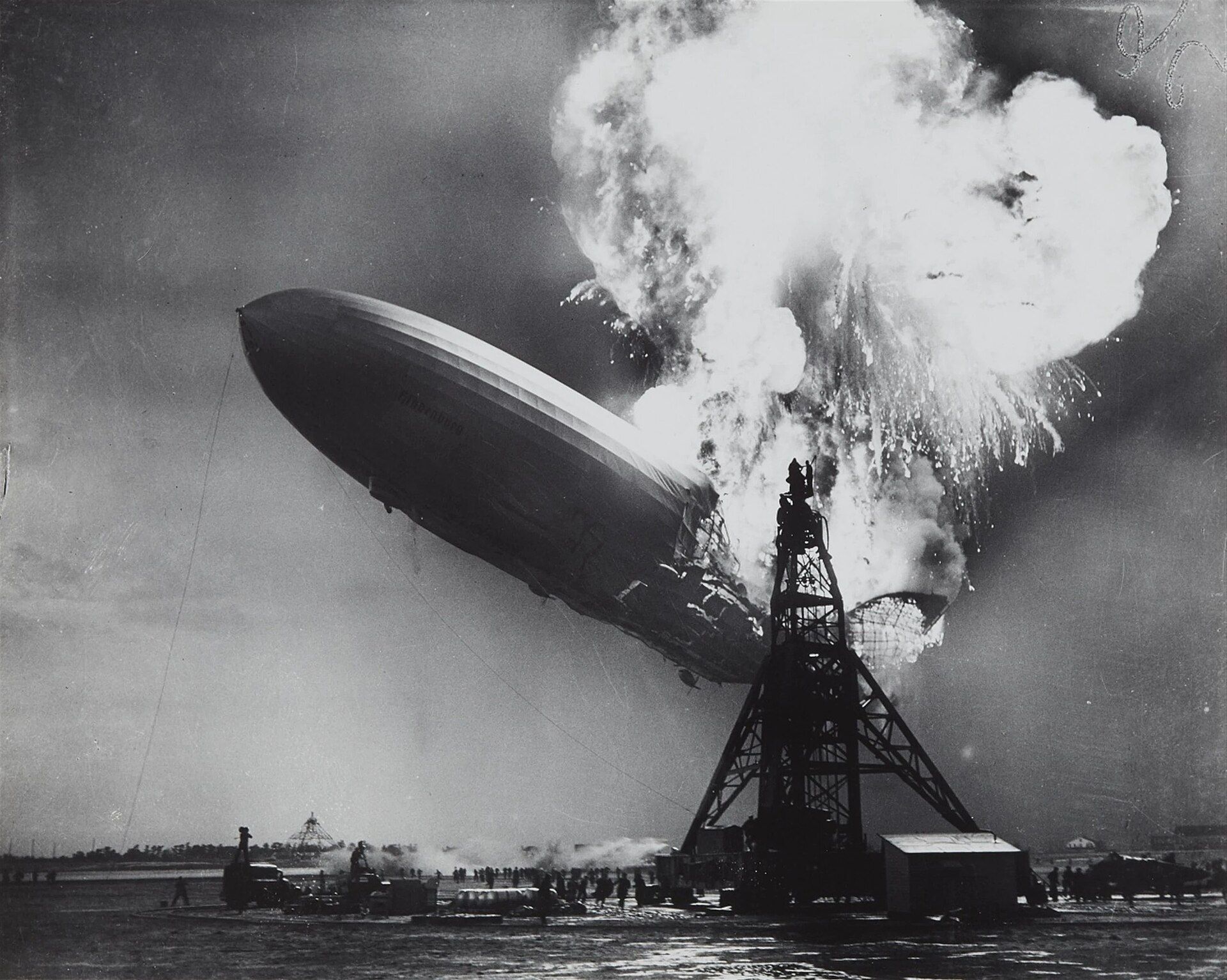 Sam Shere / Public domain
On 6 May 1937 the airship LZ 129 Hindenburg was landing at Naval Air Station Lakehurst, New Jersey, at the end of a transatlantic crossing. Reporters, newsreel crews and press photographers were waiting on the field, because the arrival of the largest flying machine ever built was a scheduled news event.
Fire appeared near the stern as the mooring lines came down. The ship was destroyed in roughly half a minute.
What airship travel actually was
It helps to know what was being lost. The Hindenburg was not a novelty; it was scheduled transatlantic transport, and in its first full season it made a series of crossings between Germany and the Americas carrying passengers who paid fares comparable to a first-class ocean passage. The trip took a couple of days rather than the better part of a week, and it was flown with dining rooms, cabins and promenade windows, at a few hundred metres above the ocean.
Nothing else in 1937 offered that. Aeroplanes could not yet cross the Atlantic with paying passengers on a schedule. The airship was, briefly, the only way to fly the ocean, and Lakehurst was its American terminal.
The numbers people misremember
Of the 97 people on board, 62 survived. One member of the ground crew was also killed, bringing the total to 36 deaths. The Hindenburg was not the deadliest airship accident — the loss of the USS Akron in 1933 killed more — but it was the one that happened in front of an audience.
Most people also assume everyone died, because the footage looks unsurvivable. The ship burned from the top and the stern while settling towards the ground, and many aboard were able to jump from the lower decks in the seconds before the hull came down. Survival largely depended on where a person happened to be standing.
“Oh, the humanity!”
Morrison's report was recorded on disc, not broadcast live, and was aired the following day. It is one of the earliest examples of a recorded eyewitness account defining how a disaster is remembered.
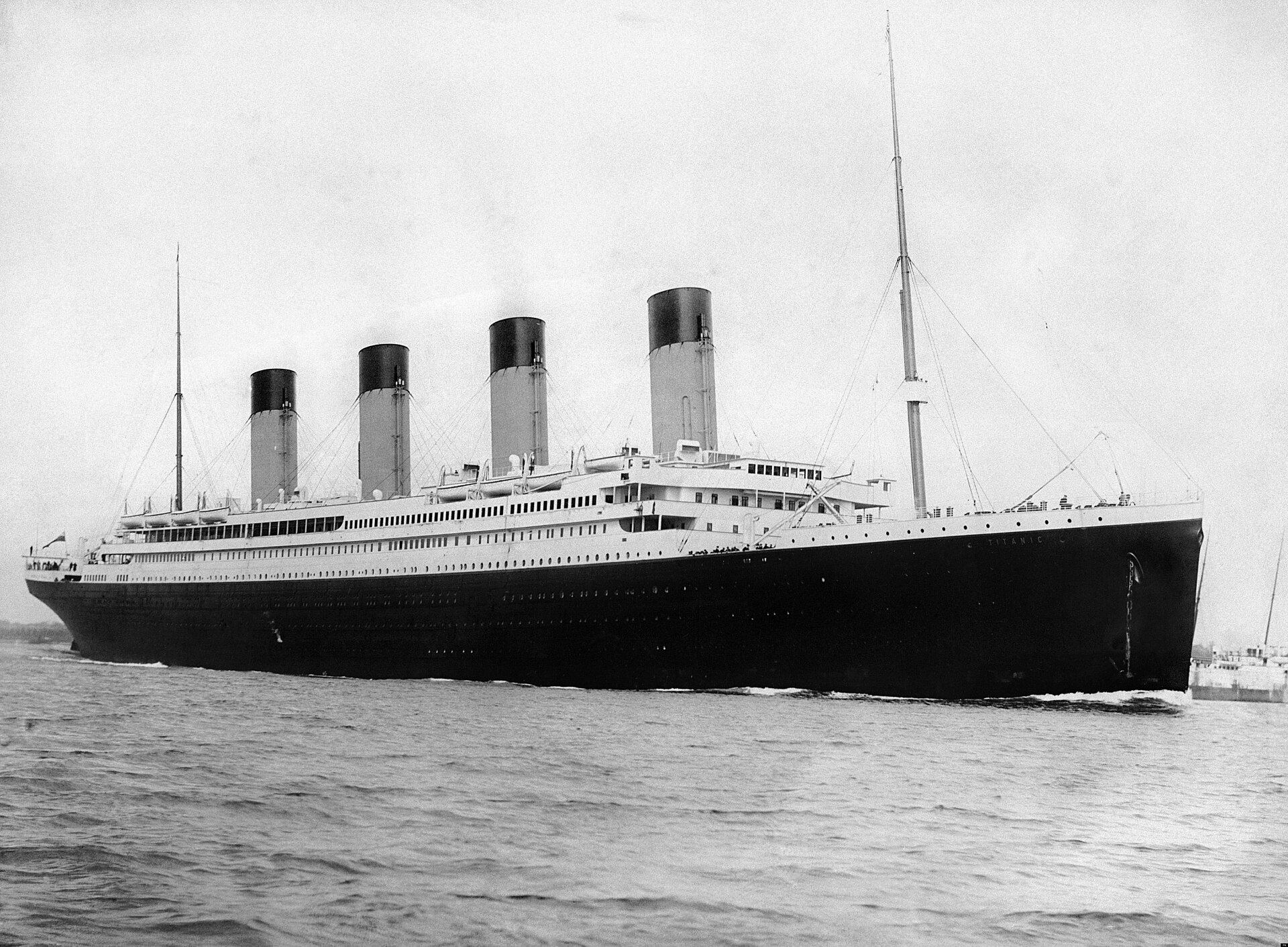 Continue reading · What happened next?The Ship in This Photograph Had Four Days LeftTitanic leaving Southampton on 10 April 1912, photographed from the quayside by a local postcard publisher who had no reason to think the picture mattered.
The audio is also routinely heard in the wrong form. The recording ran slightly slow, so the voice most people know is higher and faster than Morrison actually sounded, and the commentary is now almost always played married to newsreel footage shot by other people entirely. The definitive record of the disaster is, in effect, an edit.
Hydrogen, and the argument about the skin
The ship was filled with hydrogen because the United States restricted helium exports. Official inquiries pointed to a hydrogen leak ignited by an electrical discharge in a charged post-storm atmosphere. A later hypothesis argued that the doped outer covering contributed to the speed of the fire; researchers still disagree about how much, and the ignition source has never been established with certainty.
Sabotage was raised at the time, by the German investigation in particular, and no evidence for it was ever produced. Eighty years of subsequent testing has narrowed the question rather than closed it: the consensus holds that hydrogen was the fuel, and the argument is about the trigger and about how much the outer covering mattered. Anyone stating the cause as settled fact is going beyond what the inquiries found.
Why the industry did not recover
Commercial passenger airship travel effectively ended within months. The engineering case had not changed overnight — the accident record of large airships was already poor — but the public case had. This was the first major transport disaster to be photographed from multiple angles, filmed by newsreel crews and narrated by a recorded eyewitness, all of it in circulation within days.
A sister ship was completed and never carried paying passengers across the Atlantic. Within two years the airline business the Hindenburg was built for no longer existed, and the aeroplane inherited the route.
Image record & sources
- Photographer
- Sam Shere
- Date made
- 6 May 1937
- Collection
- Wikimedia Commons
- Licence
- Public domain
- Attribution
- Sam Shere. Public domain.
- File checked
- Licence page for this exact file — verified 29 August 2026
References
Tags
About the author
Forgotten Frame Editorial Desk
Editorial team
The Forgotten Frame editorial desk researches photographic archives, checks the licence of every individual file we publish, and writes the verified context around each picture.