She Went Over Niagara Falls in a Barrel on Her 63rd Birthday
The first person to go over Niagara in a barrel and live sent a cat over first to test the odds.
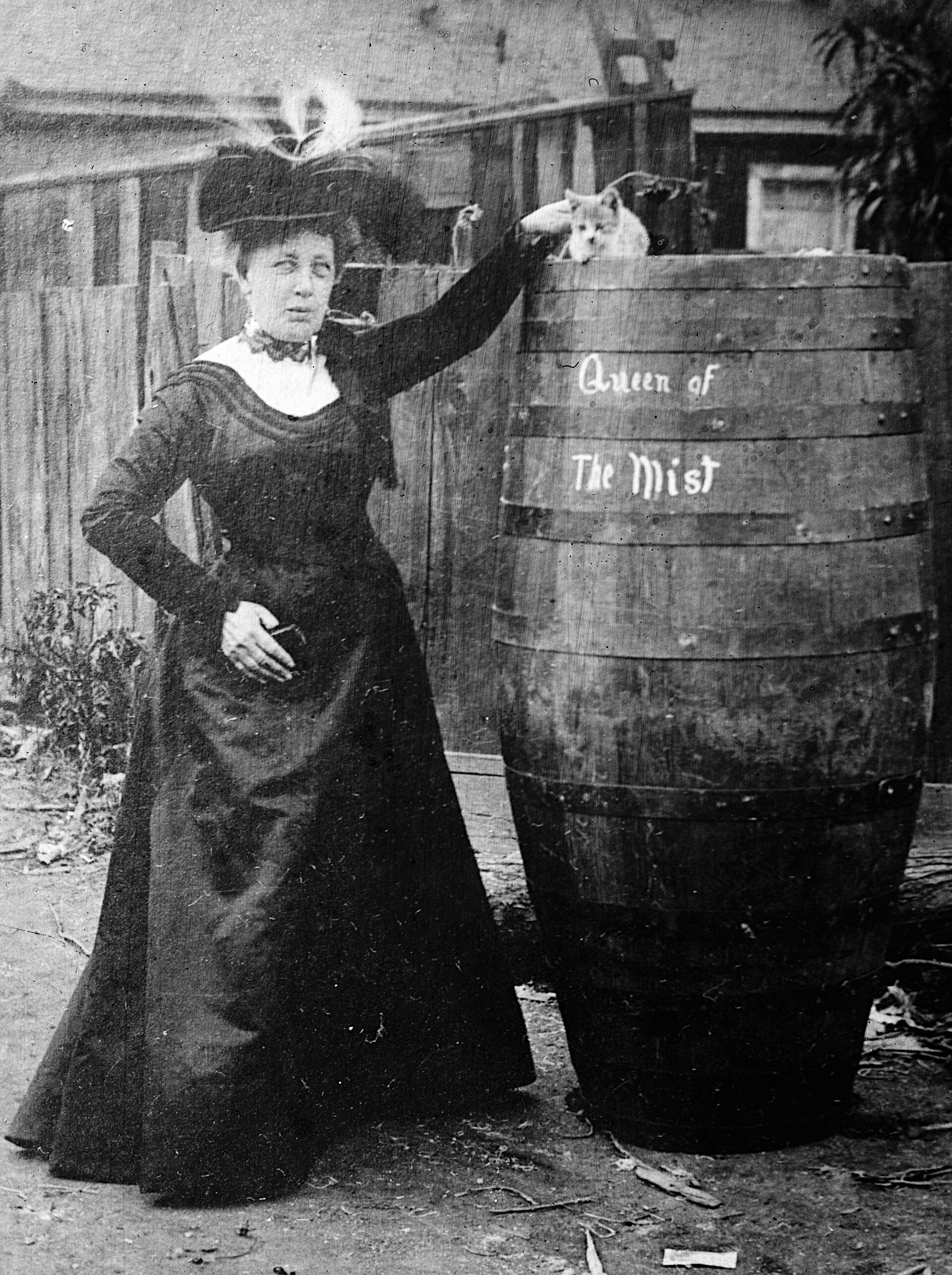 Bain News Service / Public domain
On 24 October 1901, Annie Edson Taylor climbed into a custom oak-and-iron barrel, was towed to the middle of the Niagara River and cast adrift above the Horseshoe Falls. Roughly twenty minutes later the barrel was recovered in the lower river. She was cut and dazed, but alive.
It was her sixty-third birthday. She had told the press she was in her forties.
A financial plan, not a thrill
Taylor was a widow who had trained as a teacher and spent years moving between towns looking for work that did not exist for a woman of her age and circumstances. She was facing the poorhouse. The barrel was a business proposition: survive the most famous waterfall in North America, become briefly the most talked-about person in the country, and convert that into paid lectures, souvenir sales and a book.
Every part of that plan worked except the last one. She did survive, she was famous for a season, and the money never arrived in any quantity that mattered.
The rehearsal nobody remembers
Two days earlier the barrel had been sent over with a domestic cat inside as a test. The cat survived, which was taken as sufficient proof of concept. Taylor had the barrel fitted with a mattress and a cushion, and had air pumped in before the lid was sealed.
The design detail that probably saved her was ballast. A weight in the base kept the barrel upright rather than tumbling, so she went over feet-first and largely upright, with padding taking the impact. It was crude, but it was engineering rather than luck, and it was specified by a woman who had never built anything before.
- Taylor was a widowed schoolteacher facing poverty; the stunt was an explicit plan to earn a living.
- She was the first person known to survive a trip over the falls in a barrel.
- Her manager later absconded with the barrel, which was used for exhibitions without her.
- She died in 1921 and is buried in Niagara Falls, New York.
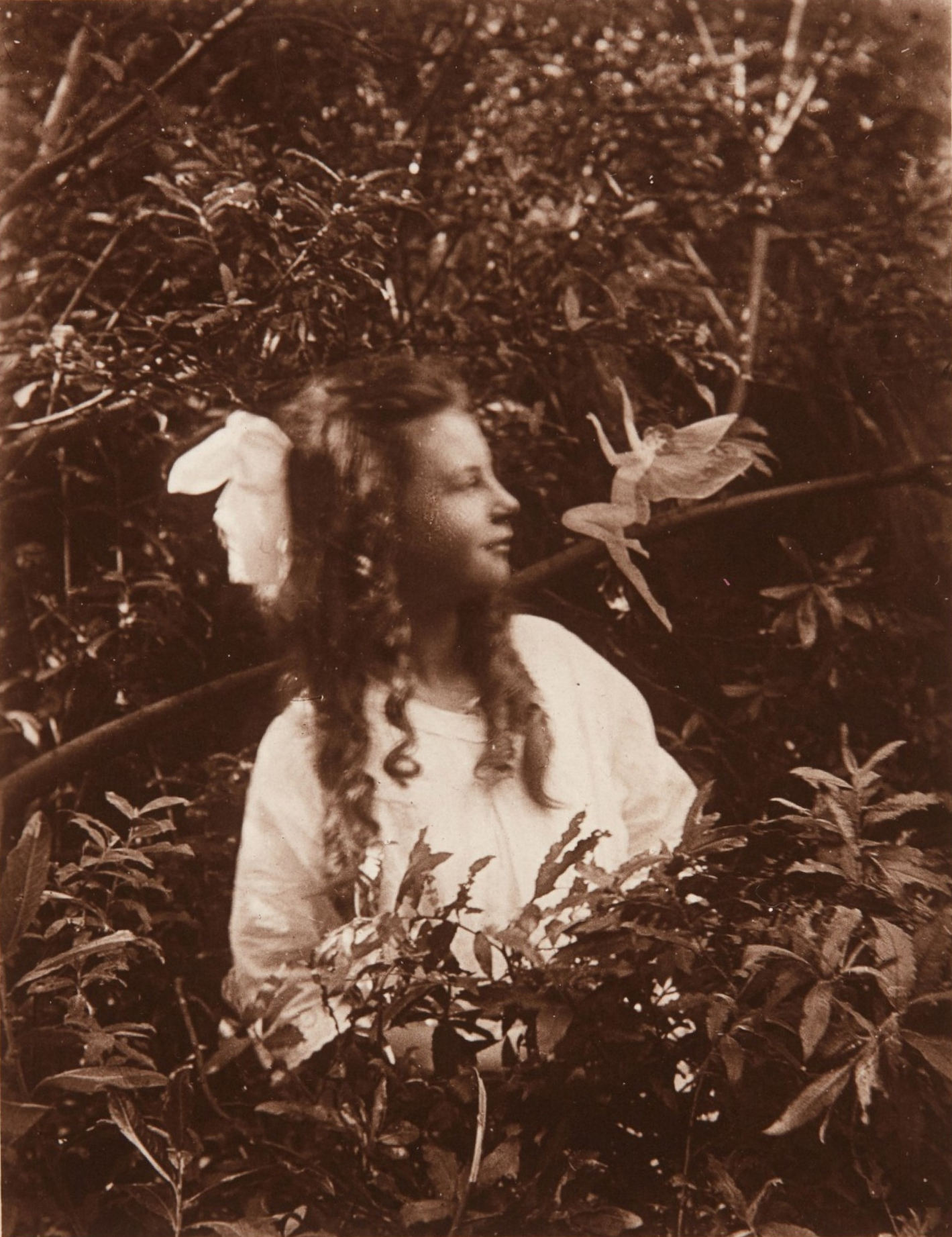 Continue reading · What happened next?Two Girls, a Borrowed Camera, and the Fairy Photographs That Convinced Sherlock Holmes's CreatorArthur Conan Doyle published them as evidence of the supernatural in 1920. The cousins who made them finally explained how in 1983 — and one of them never fully recanted.
“I would sooner walk up to the mouth of a cannon, knowing it was going to blow me to pieces, than make another trip over the Falls.”
Why the fame did not pay
The barrel was the asset, and she lost it. Her manager took it on tour without her, and a replacement barrel could not carry the same claim. Audiences also proved unwilling to pay much to hear a woman in her sixties describe what they had already read in the papers; the promoters of the period made money from spectacle, not from testimony.
She spent her last years selling souvenirs and posing for photographs near the falls, and died in poverty two decades after the descent. Others followed her over — several died, and the stunt was eventually banned outright on both sides of the border — but the pattern she established held: the person who takes the risk is rarely the person who collects.
The photograph
The picture here comes from the Bain News Service, whose glass negatives were donated to the Library of Congress and carry no known copyright restrictions. Taylor stands beside the barrel she had built to a design she specified herself — the only piece of equipment in the story she ever controlled, and by the time most people saw the picture, no longer hers.
Image record & sources
- Photographer
- Bain News Service
- Date made
- c. 1901
- Collection
- Library of Congress, George Grantham Bain Collection
- Licence
- Public domain
- Attribution
- Bain News Service / Library of Congress. Public domain.
- File checked
- Licence page for this exact file — verified 29 August 2026
References
Continue on these topics
Tags
About the author
Forgotten Frame Editorial Desk
Editorial team
The Forgotten Frame editorial desk researches photographic archives, checks the licence of every individual file we publish, and writes the verified context around each picture.