Part ofThe Photo That Changed Everything
Nobody Planned to Photograph the Earth From the Moon
The most influential environmental photograph ever taken was an improvisation by three men who were supposed to be looking the other way.
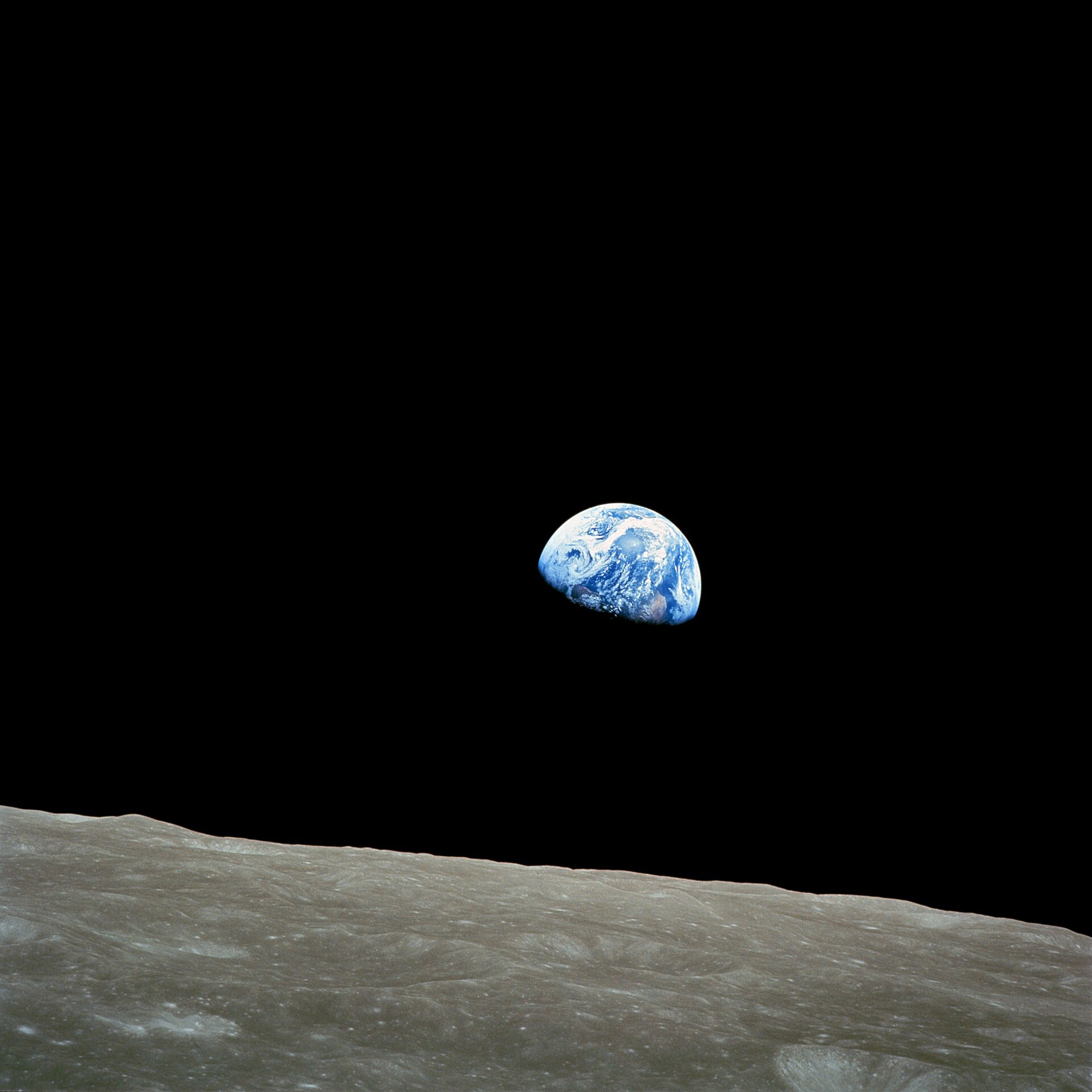 Bill Anders / Public domain
Apollo 8 was the first crewed mission to leave Earth orbit and circle the Moon. On the fourth orbit, on 24 December 1968, the spacecraft's attitude changed and the Earth came up over the lunar horizon in the window.
The onboard tape captures the scramble almost comically: a shout to look at the picture, a grab for a camera, a first frame on black-and-white, then an urgent request for a colour magazine before the moment passed. Bill Anders made the colour exposure that became known as Earthrise.
A mission assembled in a hurry
Apollo 8 was not the flight NASA had planned for December 1968. The lunar module was behind schedule, and rather than lose a launch slot the agency took a decision that still looks startling: send three men to the Moon and back without the lander, on only the third flight of the Saturn V and the first with a crew aboard. It was a calculated gamble driven partly by intelligence that the Soviet programme was preparing a circumlunar flight of its own.
That is why the photographic checklist mattered so much. The crew were not tourists. Frank Borman, Jim Lovell and Bill Anders were there to survey the surface, and Anders in particular had been trained to document candidate landing sites for the missions that would follow. The film magazines were budgeted almost frame by frame.
Why the Earth 'rises' at all
From the lunar surface, the Earth does not rise or set — the Moon keeps one face turned towards us. It only appears to rise for a spacecraft moving in orbit around the Moon. The picture is therefore a view no one standing on the lunar surface could ever have.
The famous version is also rotated. In the raw frame the lunar horizon runs vertically, because the spacecraft's orientation had nothing to do with human notions of up and down.
Both facts are usually left out, and both are the story. The most reproduced picture of our own planet is an accident of orbital mechanics, made with a hand-held camera through a small window, and then turned ninety degrees so that human eyes would accept it.
“We came all this way to explore the Moon, and the most important thing is that we discovered the Earth.”
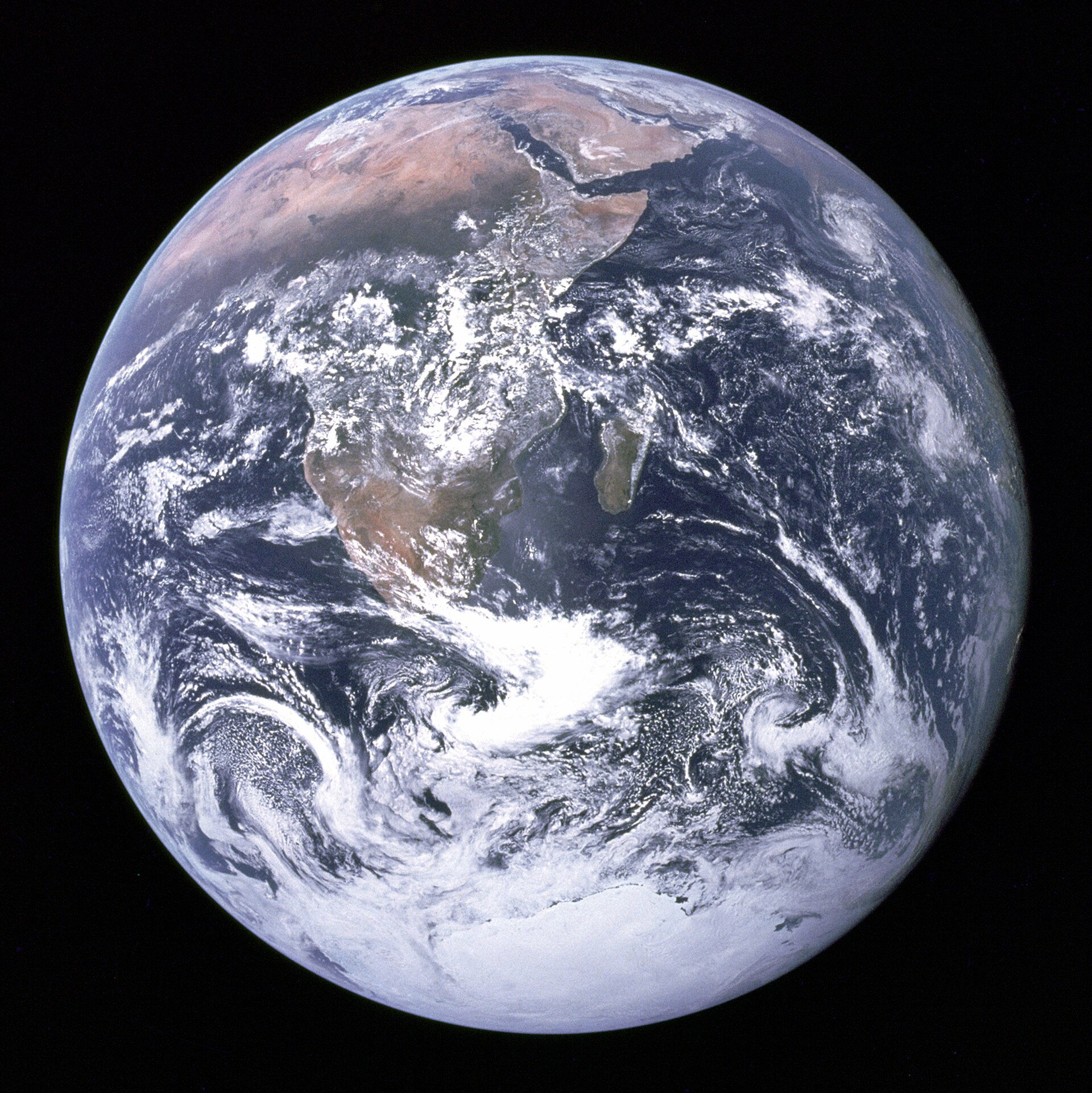 Continue reading · What happened next?The Most Reproduced Photograph in History Was Taken Through a Spacecraft WindowApollo 17's crew had the Sun behind them and a hand-held Hasselblad. The result went round the world before the astronauts did — and it is free for anyone to use.
Christmas Eve, and the largest audience in television history to that point
Hours after the photograph was made, the crew read the opening verses of Genesis during a live broadcast from lunar orbit — one of the most watched transmissions of the era. The combination is what fixed the mission in public memory: a voice from the Moon, and within days a colour photograph showing the planet those voices had left behind, small and unbordered.
It arrived at the end of a year of assassinations, riots and war coverage in the United States, which is part of why it was received the way it was. A picture is never read in isolation from the year it lands in.
Aftermath
The image was published within days and became a fixture of the emerging environmental movement; the first Earth Day followed in April 1970. As a work produced by NASA employees in the course of their duties, it is in the public domain, and it has been reproduced without permission or fee ever since.
Four years later a second crew made the other photograph everyone knows — a fully lit Earth with no horizon in the frame at all. The two pictures are often confused, and they were made under completely different conditions.
Image record & sources
- Photographer
- Bill Anders
- Date made
- 24 December 1968
- Collection
- NASA
- Licence
- Public domain
- Attribution
- NASA / Bill Anders. Public domain (work of the US government).
- File checked
- Licence page for this exact file — verified 29 August 2026
References
Continue on these topics
Tags
About the author
Forgotten Frame Editorial Desk
Editorial team
The Forgotten Frame editorial desk researches photographic archives, checks the licence of every individual file we publish, and writes the verified context around each picture.