Part ofThe Photo That Changed Everything
The Most Famous Photograph of the Depression Took Ten Minutes to Make
Lange said she made the exposures in about ten minutes. Neither she nor the woman she photographed expected the picture to outlive them both.
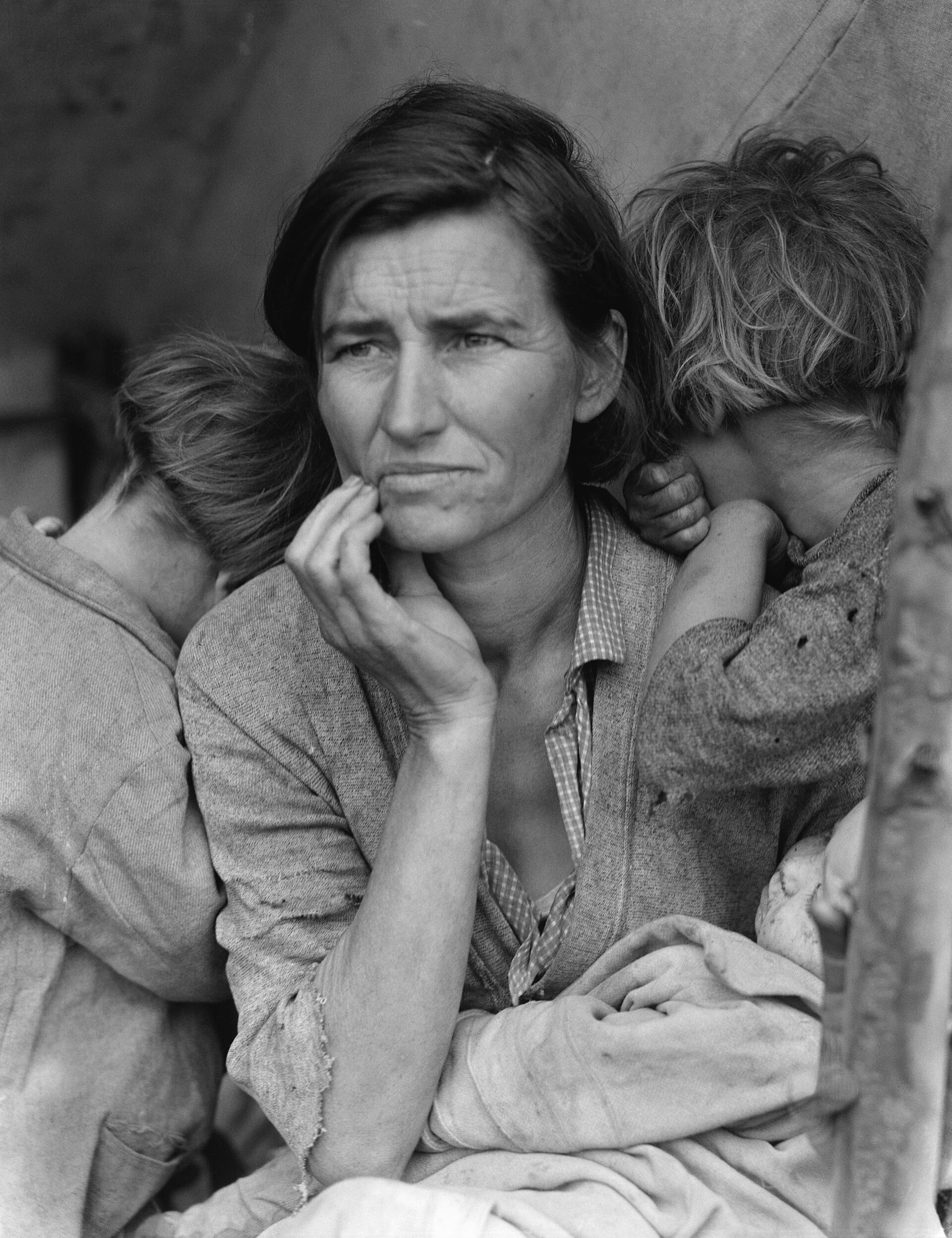 Dorothea Lange / Public domain
In March 1936 Dorothea Lange was driving home to Berkeley after a month photographing for the Farm Security Administration. She passed a hand-lettered sign for a pea-pickers' camp at Nipomo, California, kept going for twenty miles, then turned around.
What she found was a family living under a lean-to tent. The pea crop had frozen. There was no work. Lange made a handful of exposures, wrote a short caption, and left. In her own account she was there about ten minutes.
The job she was actually doing
Lange was not a freelance artist chasing a masterpiece. She was on the payroll of a federal agency whose photographic unit, run by Roy Stryker, existed to build public support for rural relief programmes. The file those photographers produced runs to well over a hundred thousand negatives, and it was assembled with a political purpose: to show Washington and newspaper readers what rural poverty looked like.
That context matters for how the picture reads. The frame is intimate, but the assignment behind it was administrative. Lange's own working notes were brief field captions typed for a government file, not titles for a gallery wall.
Five frames, then one
The Library of Congress holds the full sequence, and it is instructive. Lange started wider, with more of the tent and more children visible, and moved in. Only the last frame is the picture the world knows: the mother's hand at her chin, two children turned away, an infant asleep in her lap.
Look at the sequence in order and you can watch an image being edited in the field. The wide frames contain furniture, laundry, an older girl, the mess of an actual campsite. Each step in removes information. By the final exposure everything that would date or locate the family has gone, which is exactly why the picture could later be used to stand for an entire decade.
Her field caption was factual and slightly wrong: “Destitute pea pickers in California. Mother of seven children. Age thirty-two.” The age was right. The name was missing, and stayed missing for forty years.
March 1936
Lange photographs the family at Nipomo and files the negatives with the FSA.
1936
The San Francisco News publishes the images; federal food aid is sent to the camp.
1978
A reporter locates Florence Owens Thompson, who identifies herself as the woman in the photograph.
1983
Thompson dies; her obituaries run the picture that she said had never earned her anything.
The woman had a name
She was Florence Owens Thompson, born in Oklahoma, of Cherokee descent. She was identified publicly in 1978, when a reporter tracked her to a mobile home in Modesto. Thompson's recorded objection was consistent and simple: the photograph made her a symbol, and it never made her a living.
Her family also disputed parts of the story that had accumulated around the frame — including the widely repeated claim that they had sold the tyres from their car to buy food.
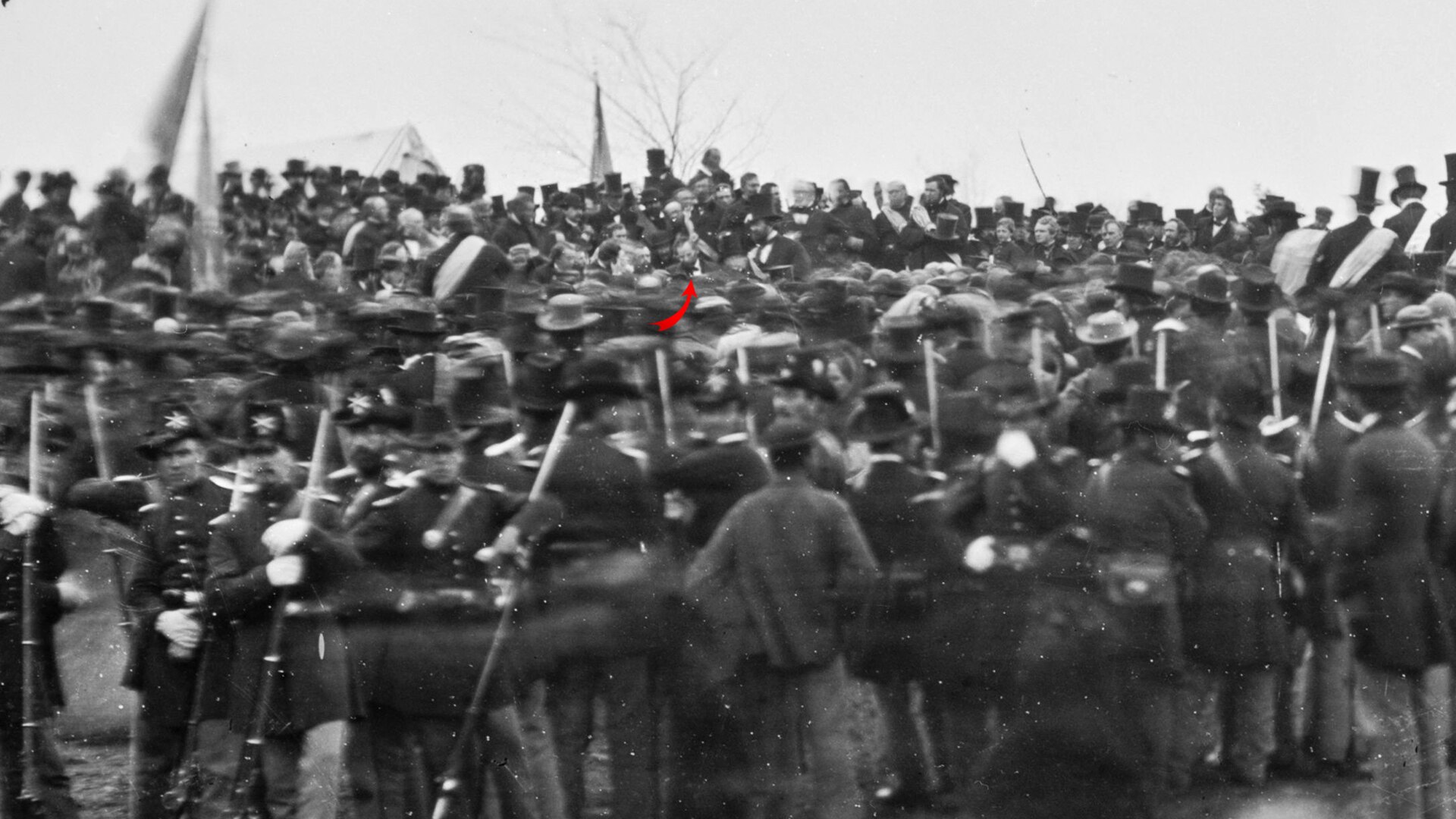 Continue reading · What happened next?It Took Almost 90 Years to Find Lincoln in This PhotographNo photographer captured the Gettysburg Address itself. But a crowd plate held by the National Archives turned out to contain the president — spotted by an archivist in 1952.
“I didn't get anything out of it. I wish she hadn't taken my picture.”
There is no comfortable way to hold those two facts together. The photograph did real work — it ran in a newspaper, and relief reached the camp — and the woman in it spent decades saying she had been used. Both are true, and a caption that keeps only the first half is not reporting.
A negative that was quietly retouched
The version reproduced everywhere is not quite what came out of the camera either. In the original negative a thumb and forefinger appear at the lower right, on the tent pole. That corner was retouched out of the printing negative held in the government file, which is why most people have never seen it.
It is a small alteration and it changes nothing about what the picture reports. It is worth knowing anyway, because the frame is routinely presented as the purest kind of documentary evidence, and even this one was tidied.
Why you can republish it
Lange made the photograph as a federal employee, so the negative entered the public domain and lives in the Library of Congress. That is the whole reason this picture became the face of the Depression rather than one of the thousands of comparable frames locked inside commercial archives.
Availability shapes memory. The images we all recognise are disproportionately the ones that were free to print — a pattern that repeats across almost every photograph in this archive, from government space programmes to war-office film units.
Image record & sources
- Photographer
- Dorothea Lange
- Date made
- March 1936
- Collection
- Library of Congress, Farm Security Administration/OWI Collection
- Licence
- Public domain
- Attribution
- Dorothea Lange / Farm Security Administration, Library of Congress. Public domain.
- File checked
- Licence page for this exact file — verified 29 August 2026
References
Continue on these topics
Tags
About the author
Forgotten Frame Editorial Desk
Editorial team
The Forgotten Frame editorial desk researches photographic archives, checks the licence of every individual file we publish, and writes the verified context around each picture.