The Statue of Liberty Was Built in a Paris Neighbourhood
Photographs from Bartholdi's workshop show workmen dwarfed by copper sections that Parisians could visit years before America saw them.
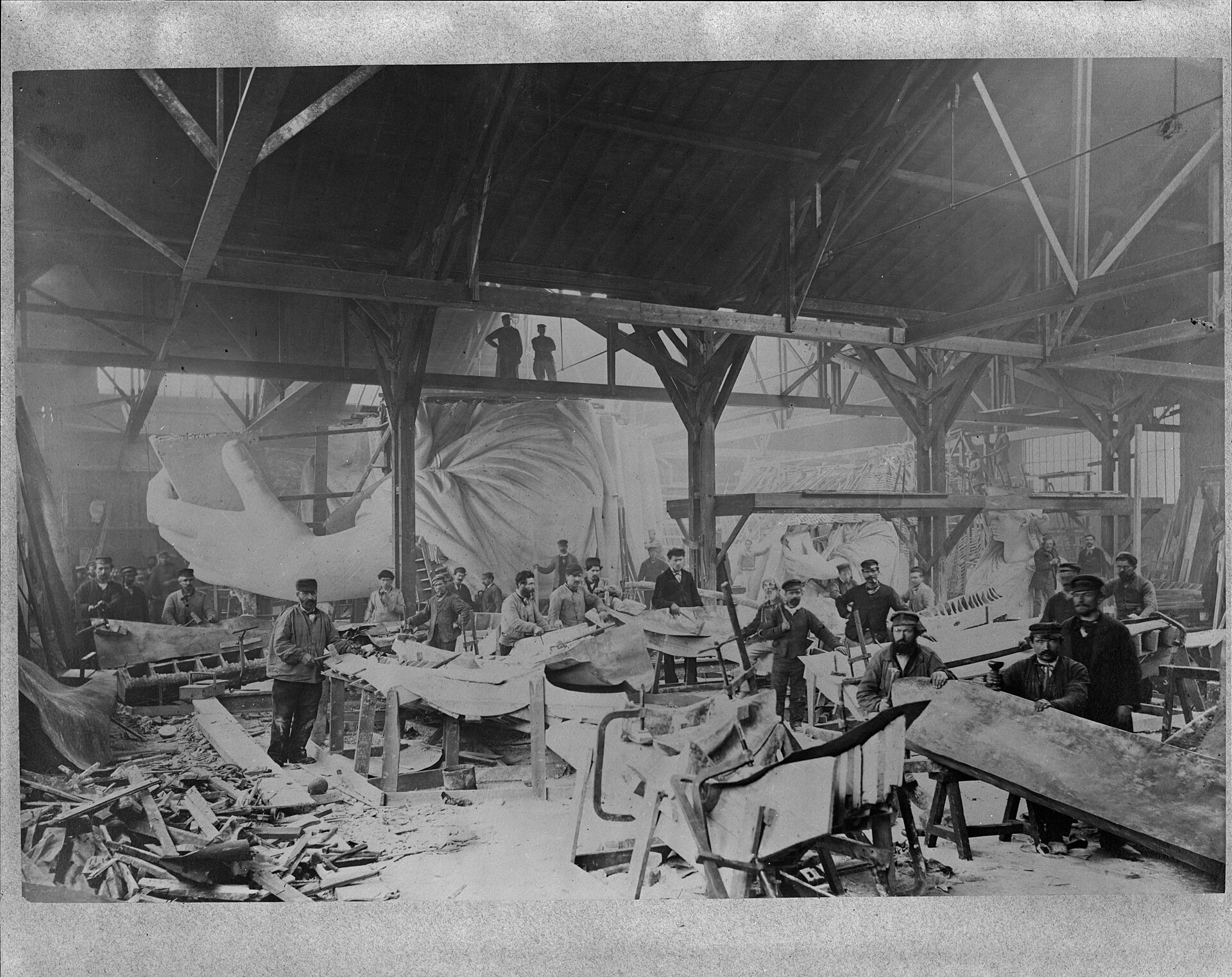 Albert Fernique / Public domain
Albert Fernique photographed the statue as it grew inside the Gaget, Gauthier & Co. workshop in Paris. The pictures are disorienting: a left hand leaning against a wall, a quarter-size head on the floor, men in waistcoats standing beside fragments of a figure that had no site yet.
The method was repoussé — sheets of copper about 2.4 millimetres thick, hammered into wooden moulds by hand. The internal iron framework that holds them was engineered by Gustave Eiffel, a few years before he began the tower.
A statue built like a ship, not a monument
The copper skin is roughly the thickness of two coins. On its own it would not stand up, and it was never meant to. Eiffel's solution was a central iron pylon carrying a secondary framework, with the copper sheets attached to flat iron bars that let the skin move independently as it expanded, contracted and took wind loads. It behaves less like a carved monument than like a hull: a rigid skeleton inside a thin flexible shell that is allowed to shift.
The workshop photographs are the only way to see any of this. Once the sections were closed up and shipped, the engineering disappeared behind the surface everyone knows, and the statue became something people assume is solid.
Assembled, then taken apart
By 1884 the completed statue stood in the middle of Paris, visible over the rooftops of the 17th arrondissement. It was then dismantled into 350 pieces, packed into 214 crates and shipped aboard the French frigate Isère, arriving in New York in June 1885.
Parisians therefore had the statue before New Yorkers did. For months it loomed over an ordinary residential quarter, photographed from neighbouring windows, before being reduced to numbered crates in a shipyard.
- The torch-bearing arm was exhibited in Philadelphia in 1876 and then in Madison Square, New York, to raise funds.
- The head was displayed at the 1878 Paris World's Fair — visitors climbed inside it.
- France funded the statue; the United States was responsible for the pedestal, and the money ran out.
- Joseph Pulitzer's newspaper campaign raised the remaining pedestal funds from 120,000 small donations.
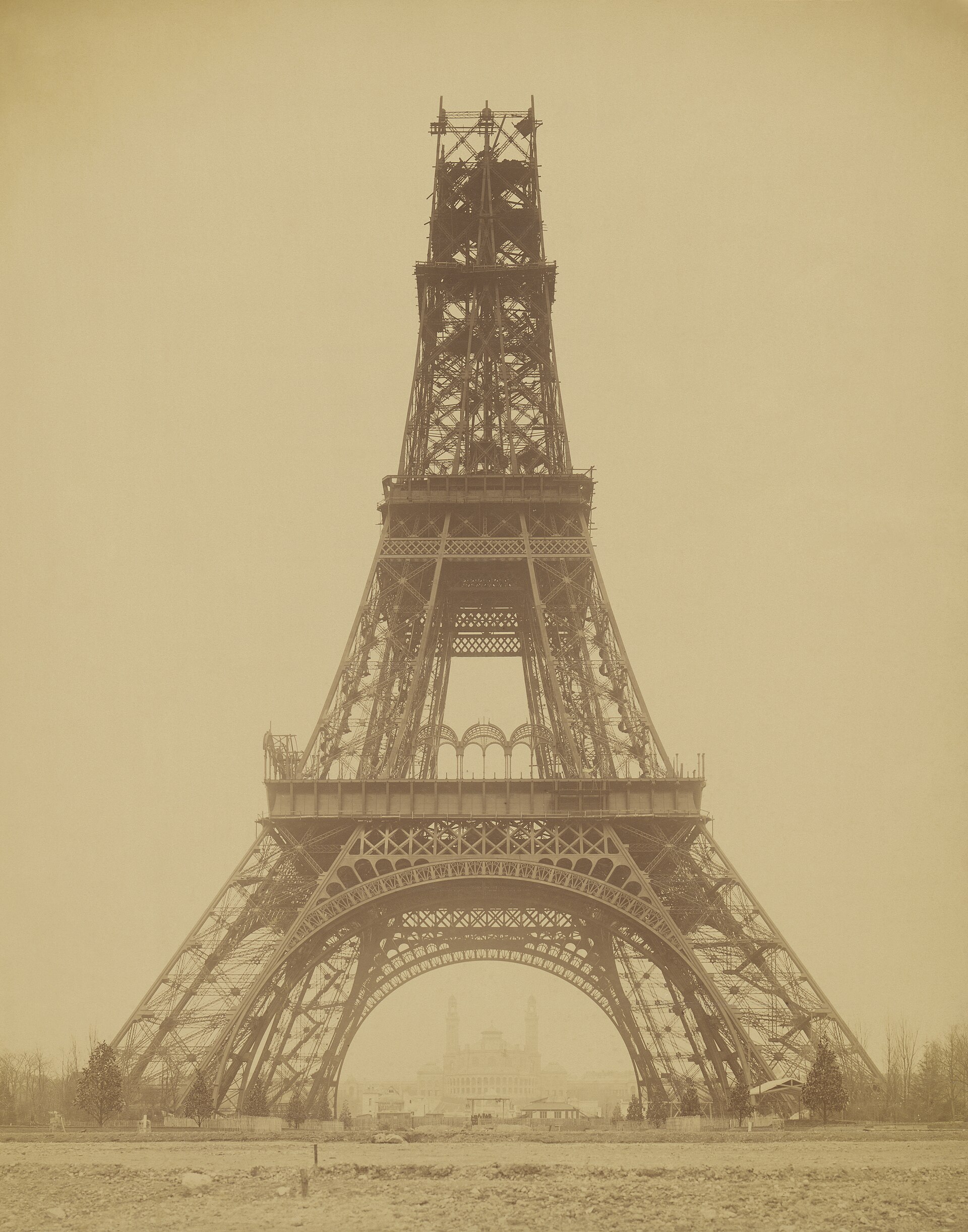 Continue reading · What happened next?Paris Agreed to Tear the Eiffel Tower DownThe permit was for twenty years. Gustave Eiffel saved his tower by making it too useful to dismantle — and the construction photographs show a structure that was never meant to last.
It was not green, and the torch is not the original
New copper is the colour of a fresh penny, and that is how the statue arrived. The green patina is corrosion — a protective copper carbonate layer that formed gradually over roughly the first three decades in the harbour air. Anyone who saw the dedication in 1886 saw a brown statue.
The torch has also changed. The original flame was altered early on to admit light and leaked persistently as a result; during the major restoration completed for the centenary in 1986 it was removed altogether and replaced with a new gold-leafed flame. The original is displayed inside the monument's museum, which means the most symbolic single element of the statue is no longer the one people photograph.
Why these images are free to publish
Fernique died in 1898 and the photographs are long out of copyright; the Library of Congress holds them as public-domain prints. The statue itself is likewise old enough that no copyright attaches to depictions of the original work.
Image record & sources
- Photographer
- Albert Fernique
- Date made
- c. winter 1882
- Collection
- Library of Congress, Prints & Photographs Division
- Licence
- Public domain
- Attribution
- Albert Fernique / Library of Congress. Public domain.
- File checked
- Licence page for this exact file — verified 29 August 2026
References
Continue on these topics
Tags
About the author
Forgotten Frame Editorial Desk
Editorial team
The Forgotten Frame editorial desk researches photographic archives, checks the licence of every individual file we publish, and writes the verified context around each picture.