Part ofBefore They Were Famous
Film's Most Recognisable Character Was Assembled in One Afternoon
Baggy trousers, a tight coat, a small hat and big shoes — a silhouette improvised on a studio lot in 1914 and still legible in a single frame today.
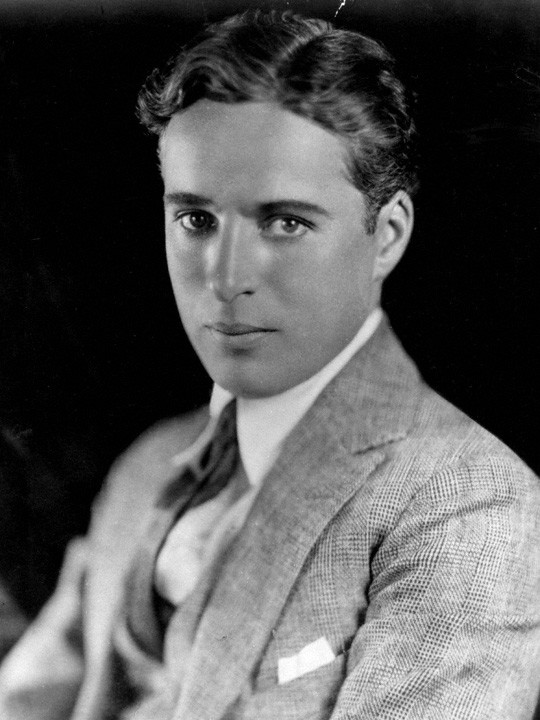 Strauss-Peyton Studio / Public domain
Chaplin arrived at Keystone Studios at the end of 1913, a music-hall performer from London with no film experience. Early in 1914, on a day when Mack Sennett wanted comedy business for a hotel-lobby scene, Chaplin was told to go and put on a comedy make-up.
By his own account in My Autobiography, he decided on contradictions: everything baggy that should be tight, everything tight that should be loose. Trousers borrowed from Fatty Arbuckle, a small derby, oversized shoes worn on the wrong feet to keep them on, a cane, and a small moustache to add age without hiding his expression.
Why a silhouette had to do the work
The costume was not decoration; it was a technical solution. Films of 1914 were silent, short, often shot in flat daylight, and projected to audiences who might be seeing the actor for the first time. A character had to be identifiable in a wide shot, at speed, with no dialogue and no close-up to help.
Everything Chaplin chose that afternoon serves that constraint. The hat is too small and the shoes too large, so the outline reads instantly at any size. The moustache is trimmed short enough to leave the mouth and eyes working. The cane gives the hands something to do at the edge of the frame. It is a design brief solved in a wardrobe room, and it is the reason a single still frame is still legible as one specific person more than a century later.
The character came with the clothes
Chaplin wrote that by the time he walked to the set he had already worked out who the man was — and that he was explaining the character to Sennett before a frame was shot. The Tramp first reached audiences in the Keystone shorts of February 1914.
Chaplin retold the story several times over the years and the details shift between versions: which garment came from whom, exactly which film came first. The order of the earliest releases is a genuinely contested point among film historians, because two Keystone shorts featuring the costume appeared within days of each other. What is not in dispute is the compressed timescale — a character invented in an afternoon and in front of paying audiences within weeks.
December 1913
Chaplin joins Keystone Studios in Los Angeles.
February 1914
The Tramp costume appears in Keystone's early releases.
1915–1917
Moves to Essanay and then Mutual on contracts that make him one of the highest-paid performers in the world.
1921
The Kid, Chaplin's first feature as director-star, makes the character internationally famous.
1940
The Great Dictator; Chaplin retires the silent Tramp after twenty-six years.
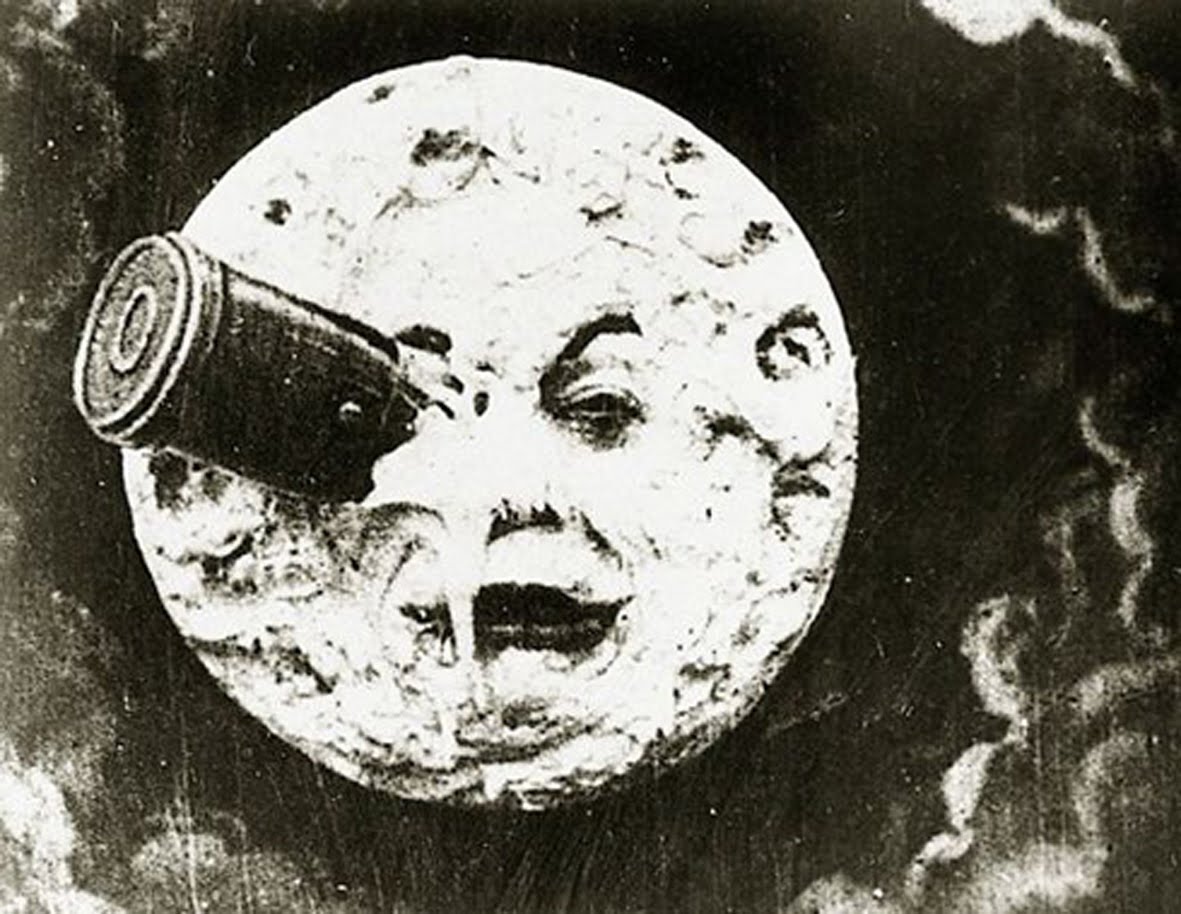 Continue reading · What happened next?The Film Everyone Quotes Was Almost Lost CompletelyGeorges Méliès burned his own negatives and ended up selling toys in a Paris railway station. A hand-coloured print of A Trip to the Moon turned up in Barcelona in 1993 — fused into a single lump.
What the costume was worth
The commercial arc is as remarkable as the creative one. Chaplin arrived at Keystone on a weekly wage typical of a jobbing comic. Within roughly three years he was negotiating contracts that made him one of the best-paid people in any industry, and by 1919 he was a co-founder of United Artists — a studio built so that he and his fellow founders could own their own work rather than sell it to someone else's company.
That leverage came from the silhouette. Distributors were not buying performances; they were buying a recognisable figure that audiences would queue for. The wardrobe improvisation of 1914 is the moment an actor accidentally acquired a trademark.
Why this portrait is publishable
Chaplin's films remain in copyright in many territories, and modern publicity images certainly are. This studio portrait, however, was published in the United States before 1930 and is in the public domain, with the file's licence status recorded on its source page.
It is a reminder that image rights, not historical importance, decide what most people ever get to see.
Image record & sources
- Photographer
- Strauss-Peyton Studio
- Date made
- c. 1920
- Collection
- Wikimedia Commons
- Licence
- Public domain
- Attribution
- Strauss-Peyton Studio. Public domain.
- File checked
- Licence page for this exact file — verified 29 August 2026
References
Continue on these topics
Tags
About the author
Forgotten Frame Editorial Desk
Editorial team
The Forgotten Frame editorial desk researches photographic archives, checks the licence of every individual file we publish, and writes the verified context around each picture.