Part ofBefore They Were Famous
The Film Everyone Quotes Was Almost Lost Completely
One of the most quoted images in cinema survived by accident, and its restoration took nearly two decades.
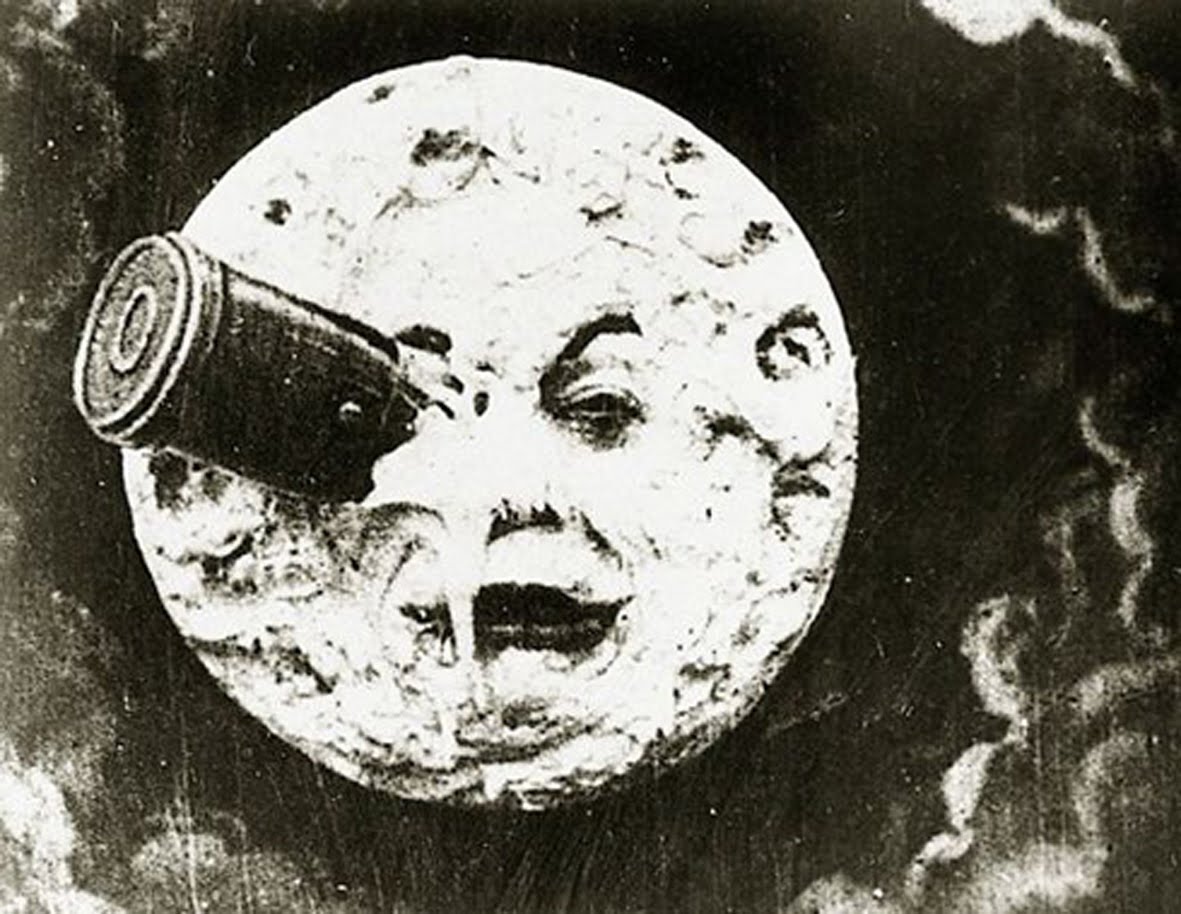 Georges Méliès (Star Film) / Public domain
Le Voyage dans la Lune was released in 1902. Méliès shot it at his glass-house studio at Montreuil, built the sets, designed the costumes, and played the lead. Prints were sold outright to exhibitors, and some were hand-coloured frame by frame by a workshop of colourists in Paris.
The film was pirated almost immediately in the United States, which cost Méliès much of his American income. By 1923 he was bankrupt. He is reported to have burned the negatives held at Montreuil in a fit of despair, and later ran a toy and sweet stall at the Gare Montparnasse.
How films were sold before there was a film industry
The business model is the reason so little survives. Méliès did not licence his films; he sold physical prints to fairground showmen and exhibitors, who ran them until the copies wore out. There was no distributor keeping a master, no archive, no legal framework worth the name for stopping someone in another country from duplicating a print and selling their own copies.
Colour was applied by hand. A workshop of colourists painted the image area frame by frame, in a division of labour that produced dozens of tinted prints of a film running several hundred metres. Each coloured print was therefore a handmade object, and once the last one was lost the colour version of the film ceased to exist in any form.
A lump of film in Barcelona
In 1993 a hand-coloured print was donated to the Filmoteca de Catalunya. Decomposition had welded the reel into a solid mass; it was, in effect, a cylinder of film that could not be unwound.
Nitrate film does this. It shrinks, softens and finally fuses, and by the time a reel has reached that state it is normally written off. The Barcelona print was catalogued as unrecoverable for years before restorers were prepared to attempt it, because there is no way to test the approach without risking the only copy.
Over the following years conservators separated what they could, photographed fragments individually and digitally reconstructed the colour version. The restored colour print premiered at Cannes in 2011 — 109 years after the film's release.
1902
Le Voyage dans la Lune is released; hand-coloured prints are sold to exhibitors.
1923
Méliès, bankrupt, destroys negatives held at his Montreuil studio.
1931
Rediscovered by a younger generation of French film-makers, he is awarded the Légion d'honneur.
1993
A decomposed hand-coloured print reaches the Filmoteca de Catalunya.
2011
The digitally restored colour version premieres at the Cannes Film Festival.
 Continue reading · What happened next?Film's Most Recognisable Character Was Assembled in One AfternoonTold to think up a comedy make-up, Chaplin walked into the Keystone wardrobe, borrowed trousers from one actor and shoes from another, and came out as a character he would play for twenty-six years.
What the famous frame is actually doing
The shot everyone knows — the capsule lodged in the eye of the Man in the Moon — is usually reproduced as a piece of whimsy. It is also a technical demonstration. Méliès was a stage magician before he was a film-maker, and the film is built from theatrical illusions adapted to the camera: substitution cuts, superimpositions, painted perspective sets, a moon face brought towards the lens on a moving platform so the capsule appears to arrive.
That is the reason this particular frame survived as an icon while the rest of the film went unseen for decades. It compresses the entire argument of early cinema into a single image: the camera could show something that had not happened and could not happen.
Rediscovered in his lifetime, barely
Méliès was recognised again in the late 1920s, given an apartment by a film-industry charity, and awarded the Légion d'honneur in 1931. He died in 1938. A large part of his output — he made hundreds of films — is still lost, and what exists survives mostly because individual prints ended up somewhere nobody thought to throw them away.
The film, and this frame from it, are in the public domain.
Image record & sources
- Photographer
- Georges Méliès (Star Film)
- Date made
- 1902
- Collection
- Wikimedia Commons
- Licence
- Public domain
- Attribution
- Georges Méliès, Star Film. Public domain.
- File checked
- Licence page for this exact file — verified 29 August 2026
References
Continue on these topics
Tags
About the author
Forgotten Frame Editorial Desk
Editorial team
The Forgotten Frame editorial desk researches photographic archives, checks the licence of every individual file we publish, and writes the verified context around each picture.