Part ofThe Hollywood Breakup FilesWhere Are They Now?
They Filmed Their Last Scene Together, and the Next Day She Filed for Divorce
A network that did not want him cast, a production company that bought RKO, a divorce filed in March 1960, and the woman who then ran the studio alone.
PUBLIC RECORDCentral claim classification. Reported and disputed material is labelled in the text.
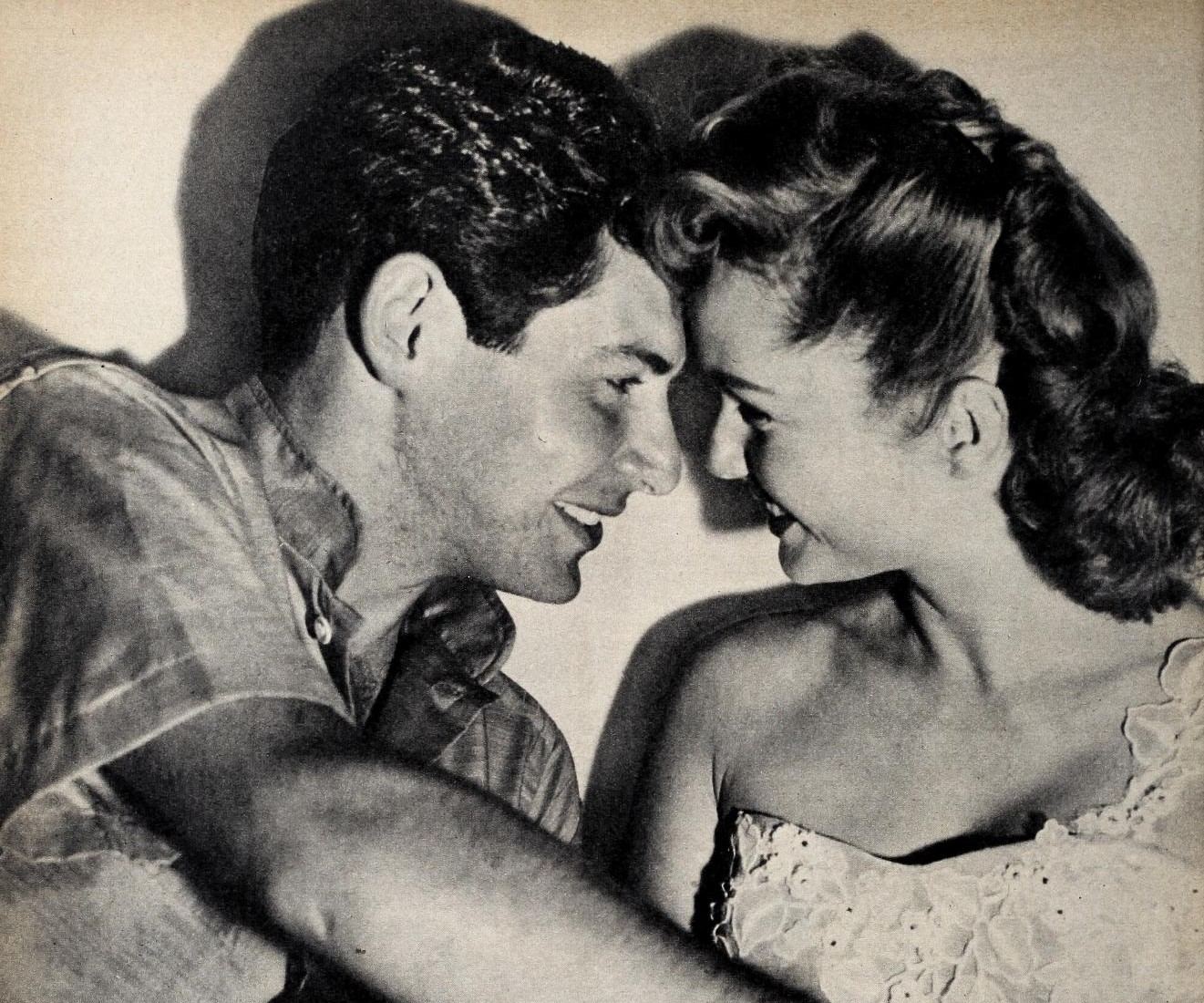
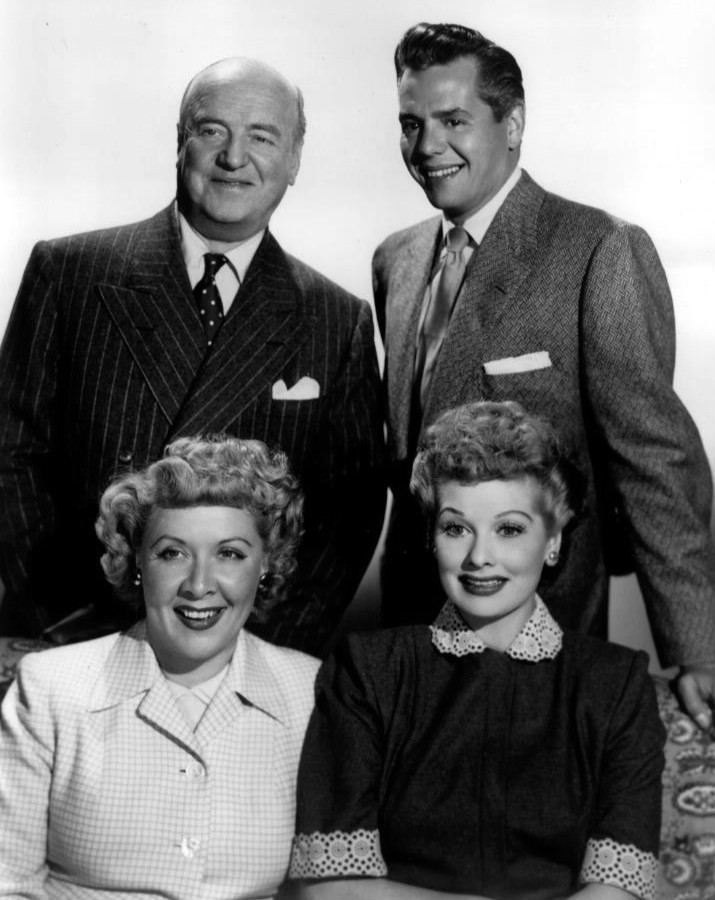
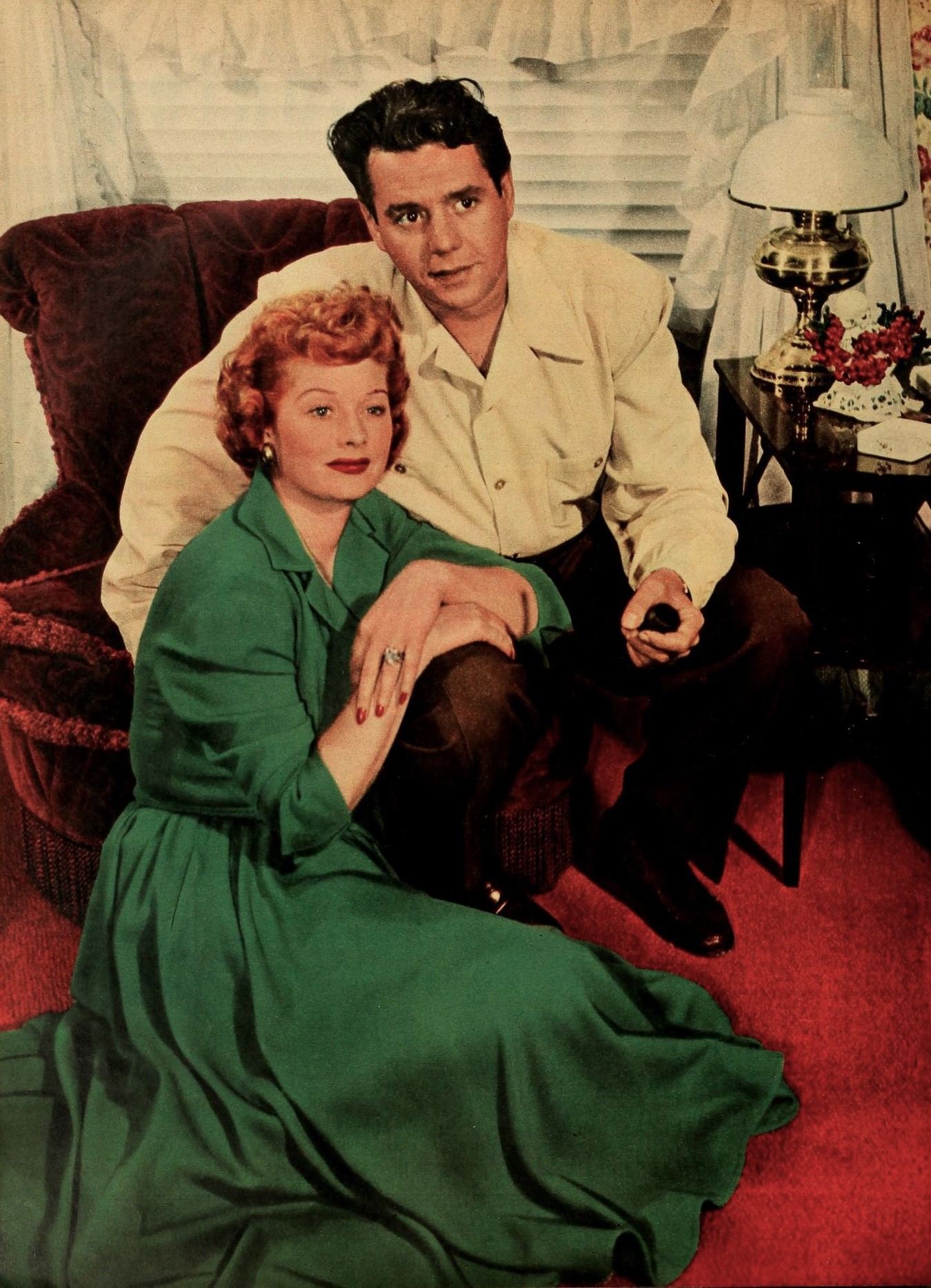 Photographer not credited / Public domain
The short version
In 1950 CBS wanted Lucille Ball to bring her radio comedy to television and did not want her real husband to play her television husband. The network's stated concern was that American audiences would not accept a Cuban bandleader married to a red-headed Midwesterner. Ball and Arnaz took a vaudeville act on the road to demonstrate that audiences did accept it, and came back with the evidence.
What they negotiated next changed the economics of television. Rather than take a higher fee, they accepted a lower one in exchange for ownership of the films — and insisted the show be shot on 35mm film in front of a live audience rather than broadcast live. That decision is the reason I Love Lucy survives in watchable form today, and the reason the reruns made them rich.
Step by step, with dates
30 November 1940
Lucille Ball and Desi Arnaz marry, six months after meeting on the RKO film Too Many Girls.
1950
The couple form Desilu Productions.
15 October 1951
I Love Lucy premieres on CBS. It is filmed on 35mm before a studio audience — an approach the couple pushed for and partly paid for.
19 January 1953
The episode in which Lucy Ricardo gives birth airs, watched by a larger American audience than the presidential inauguration the following day.
1957
Desilu buys the RKO studio lots, the company where the two of them had met seventeen years earlier.
1957–1960
The half-hour series ends and continues as The Lucy–Desi Comedy Hour, a run of hour-long specials.
2 March 1960
The final Lucy–Desi episode, 'Lucy Meets the Moustache', is filmed.
3 March 1960
Ball files for divorce in Santa Monica. It is granted in May 1960 after nineteen years of marriage.
1962
Ball buys out Arnaz's share of Desilu and becomes the studio's president — the first woman to run a major American television studio.
1967
Ball sells Desilu to Gulf+Western. The company's productions by then include Star Trek and Mission: Impossible.
2 December 1986
Desi Arnaz dies in California, aged 69.
26 April 1989
Lucille Ball dies in Los Angeles, aged 77.
Established beyond dispute
- PUBLIC RECORD: the couple married in November 1940; Ball filed for divorce in March 1960 and it was granted that May.
- PUBLIC RECORD: the divorce petition was filed the day after the final Lucy–Desi episode was shot.
- CONFIRMED: Desilu was owned by the couple, purchased the RKO lots in 1957, and was sold in 1967 after Ball had bought out Arnaz.
- CONFIRMED: I Love Lucy was shot on 35mm film in front of a live audience, an arrangement the couple negotiated in exchange for owning the negatives.
- PUBLIC RECORD: Ball became president of Desilu in 1962.
The part that is not a legend
The claim that Ball and Arnaz invented the multi-camera sitcom is an overstatement — the technique had precedents — but the claim that they industrialised it is not. Cinematographer Karl Freund's three-camera film setup for I Love Lucy became the template for filmed situation comedy for the next fifty years, and the rerun market the couple created by owning their negatives is now the entire basis of television syndication.
The other durable myth is that the marriage collapsed suddenly in 1960. Both of them said otherwise in later interviews and in Arnaz's 1976 memoir: the working partnership outlasted the marriage by years, and the divorce came at the end of a long decline rather than after a single rupture. What is documented is the timing of the filing, not a cause.
In their own words
“I loved her, and she loved me. It just didn't work.”
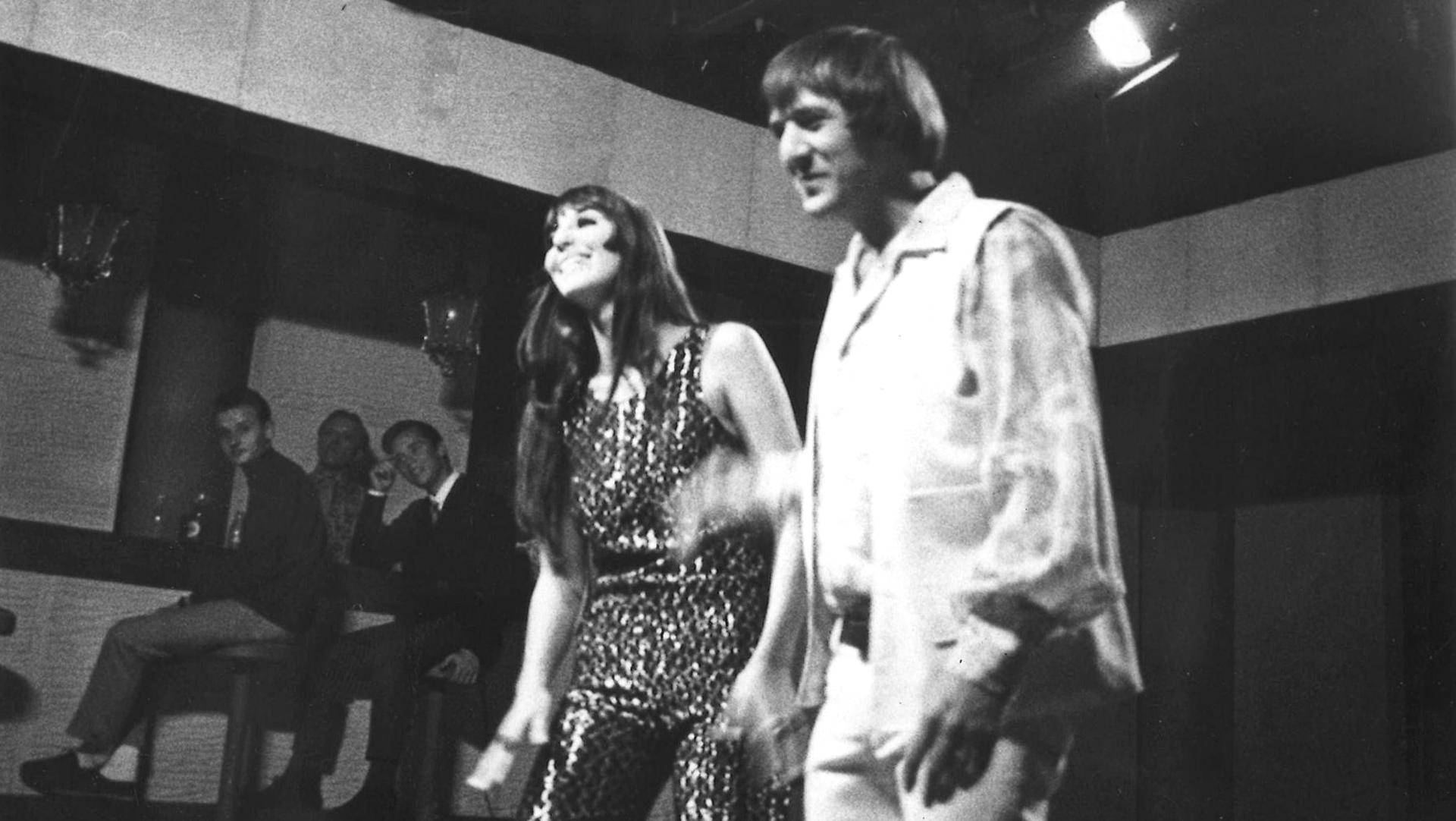 Continue reading · What happened next?They Divorced — Then Went Back on Television Together and Pretended to Be MarriedCher filed for separation in 1974, married Gregg Allman four days after her divorce was final, and then returned to CBS to co-host a variety show with her ex-husband for another two years.
Ball's public account was similarly unsparing and similarly free of blame. She remarried in 1961, to comedian Gary Morton, and stayed married to him until her death. Arnaz remarried in 1963. The two continued to speak, and Ball has described in interviews the message he sent shortly before his death in 1986.
The aftermath
Ball ran Desilu for five years and green-lit two series the network was unconvinced by: Star Trek and Mission: Impossible. Both were made because the studio's president backed them. She sold the company in 1967 and returned to acting; she died in 1989 having won four Emmy Awards.
I Love Lucy has never been off American television since 1951. It was added to the Library of Congress's National Film Registry, and the negatives the couple insisted on owning are the reason there is anything to preserve. The marriage lasted nineteen years. The business decision they made in 1951 is still running.
The deal that built the reruns
In 1951 network television was almost entirely live, broadcast from New York, and preserved — where it was preserved at all — on kinescopes, films shot off a monitor with visibly degraded picture. Ball and Arnaz wanted to work in Los Angeles, which meant the East Coast would see a kinescope. They proposed shooting on 35mm film instead, which cost considerably more. CBS refused to cover the difference.
The couple agreed to take a pay cut of roughly a thousand dollars a week to close the gap, on condition that Desilu owned the resulting negatives outright. CBS, which had no rerun market to imagine in 1951, agreed. Within five years the network was buying the same episodes back to broadcast again, and by 1957 Desilu's sale of the I Love Lucy catalogue rights was large enough to finance the purchase of the RKO lots. Every syndicated sitcom since has run on the logic of that trade.
Arnaz as producer
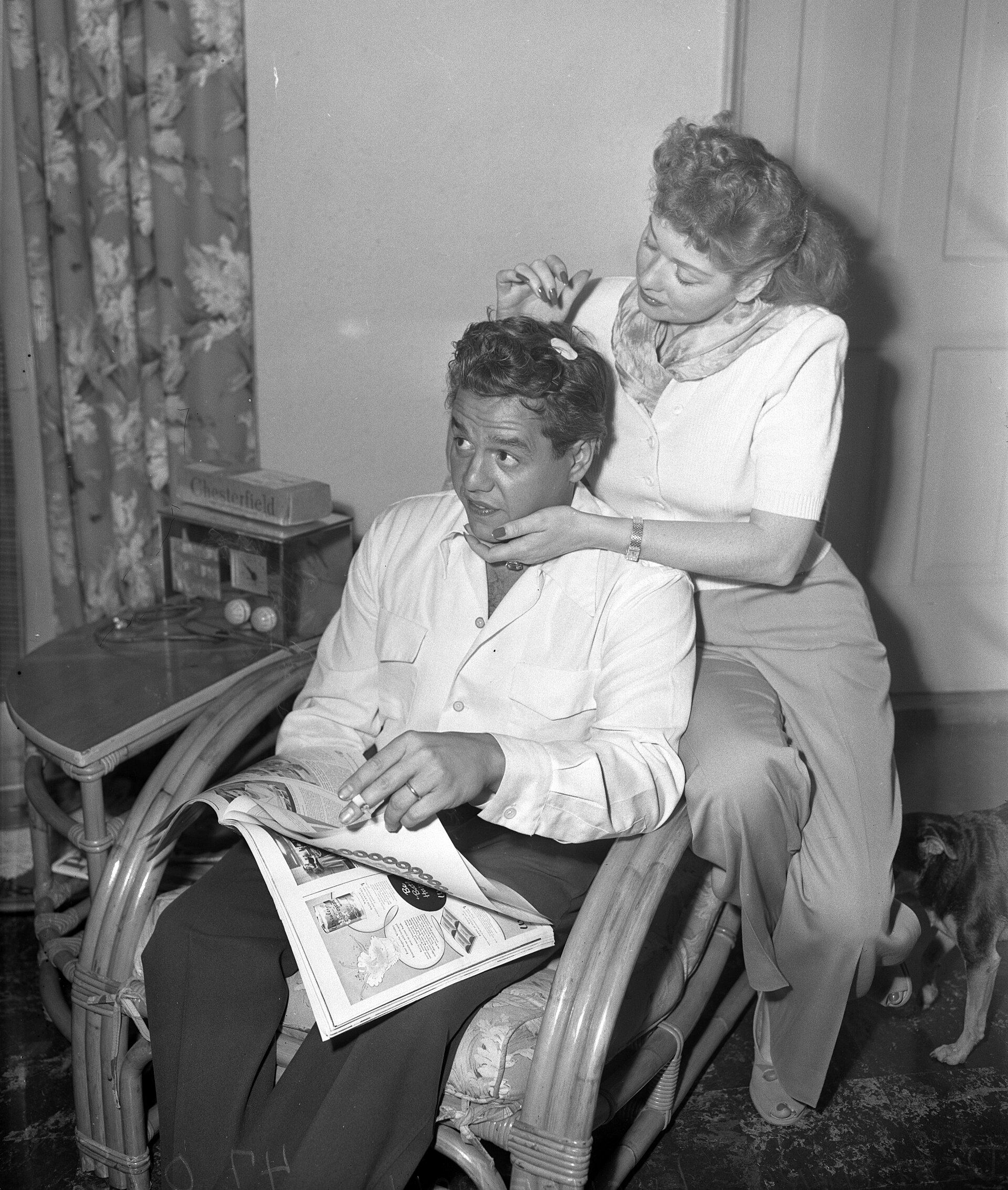
Arnaz's contribution is routinely reduced to the accent and the conga drum, and the production record does not support that. He hired Karl Freund — a cinematographer who had shot Metropolis and Dracula — to solve the problem of lighting three cameras and a live audience simultaneously without shadows. He pushed for the audience to be present at the filming, which is why the laughter on the soundtrack is real. He ran the studio's day-to-day operations until 1962.
He also lost control of it. By the late 1950s his drinking and the strain of running a studio while starring in its flagship series were documented by colleagues and later by Arnaz himself in print. The 1962 buy-out was not a hostile manoeuvre by Ball; it was, on both their accounts, a transaction he wanted. He continued to produce independently afterwards, including The Mothers-in-Law, and remained on speaking terms with her for the rest of his life.
Image record & sources
- Photographer
- Photographer not credited
- Date made
- 1952
- Collection
- Wikimedia Commons
- Licence
- Public domain
- Attribution
- Photographer uncredited. Public domain, via Wikimedia Commons.
- File checked
- Licence page for this exact file — verified 30 August 2026
References
Continue on these topics
Tags
About the author
Forgotten Frame Editorial Desk
Editorial team
The Forgotten Frame editorial desk researches photographic archives, checks the licence of every individual file we publish, and writes the verified context around each picture.