The Man Who Took the First Flight Photograph Had Never Used a Camera
One exposure, one chance, and a photographer who later admitted he was too excited to know whether he had pressed anything at all.
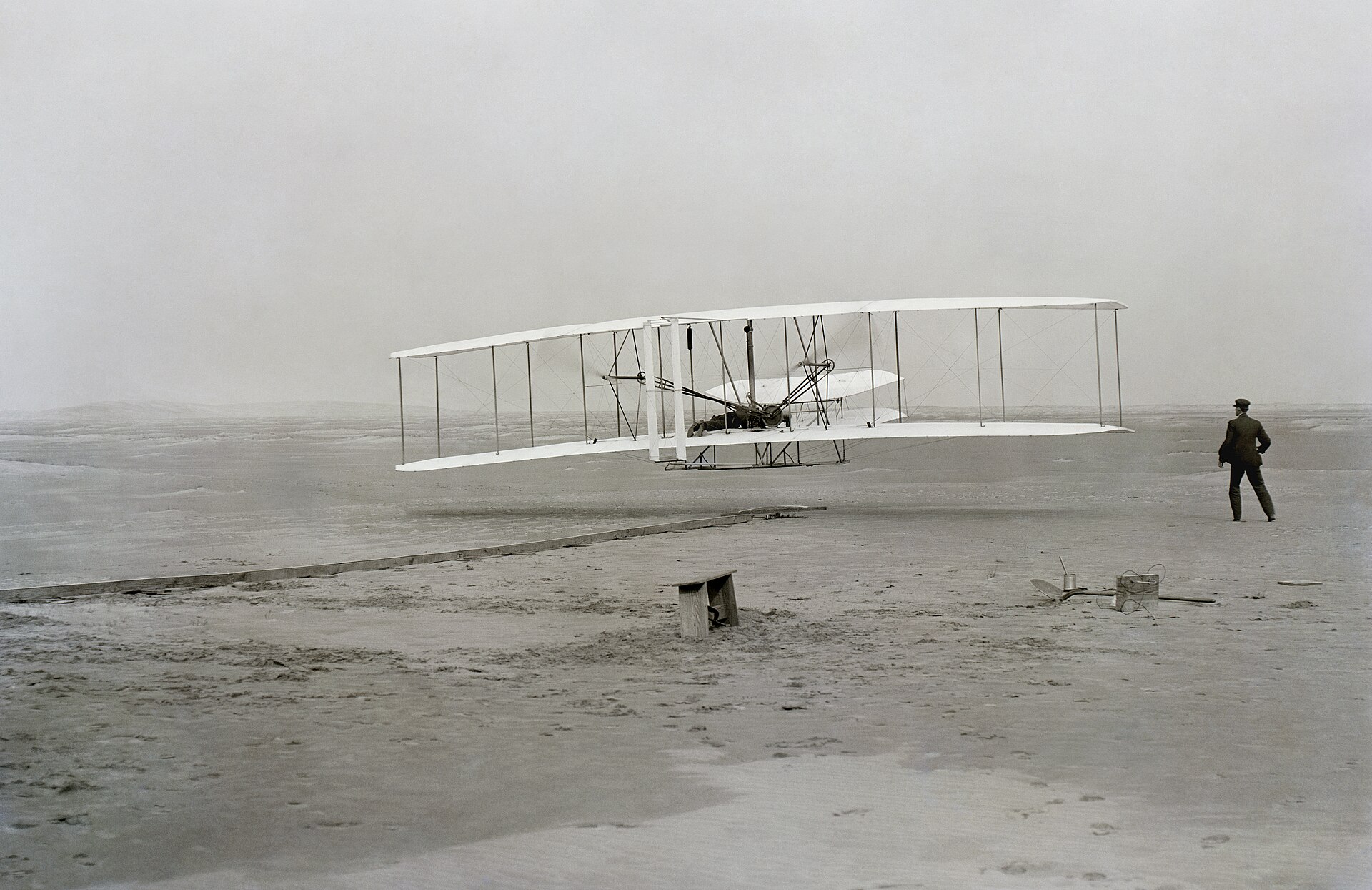 John T. Daniels / Public domain
Before the first attempt on 17 December 1903, Orville Wright set his glass-plate camera on a tripod, aimed it at the point where he expected the machine to leave the launching rail, and focused it. Then he handed the shutter release to John T. Daniels of the Kill Devil Hills lifesaving station and told him to squeeze the bulb if anything happened.
Daniels had never operated a camera. He squeezed the bulb at the instant the Flyer lifted, with Wilbur still running at the wingtip and the skid shadow visible on the sand. He said afterwards that he was so absorbed in watching the machine he did not know whether he had taken a picture at all.
Why the brothers wanted a witness with a camera
The Wrights were bicycle makers from Dayton with no scientific standing, working on a windswept sandbar hundreds of miles from anyone who might vouch for them. They knew that a claim to have flown a powered machine would be met with exactly the scepticism it later received. Photography was their answer to that problem: a plate camera on a tripod, pre-focused on a fixed point, with local men from the lifesaving station standing by as witnesses.
It is worth being precise about what was new that morning. Gliding flight had been done, by the Wrights themselves and by others before them. What had not been done was sustained, powered, controlled flight in a machine carrying a person, with the pilot able to steer it. The Flyer's wing-warping control system, worked out in a wind tunnel the brothers built in their shop, was the real invention. The engine was almost an afterthought, built in-house by their mechanic Charlie Taylor because no manufacturer would supply one light enough.
What the frame proves
The image does a great deal of evidentiary work. It shows the aircraft airborne under power, the launching rail behind it, and a human witness in the frame. The Wrights, who were secretive about their machine for years afterwards, had unusually good documentation of the one moment that mattered.
Read it as a document rather than an icon and small details start doing work. The rail on the sand establishes that the machine took off under its own power rather than being launched down a slope. Wilbur's running posture fixes the instant: the Flyer has just left the rail and he has not yet fallen behind. The elevator is angled up at the front, which is why the aircraft is nose-high. Every one of those details would have been challenged if the brothers had brought back only a written account.
- Four flights were made that day; the first covered roughly 120 feet in about 12 seconds.
- The longest, flown by Wilbur, ran about 852 feet in 59 seconds.
- After the flights, a gust flipped the Flyer. Daniels was caught in the wreckage — arguably the first powered-aircraft accident injury.
- The 1903 Flyer never flew again. It is now displayed at the Smithsonian's National Air and Space Museum.
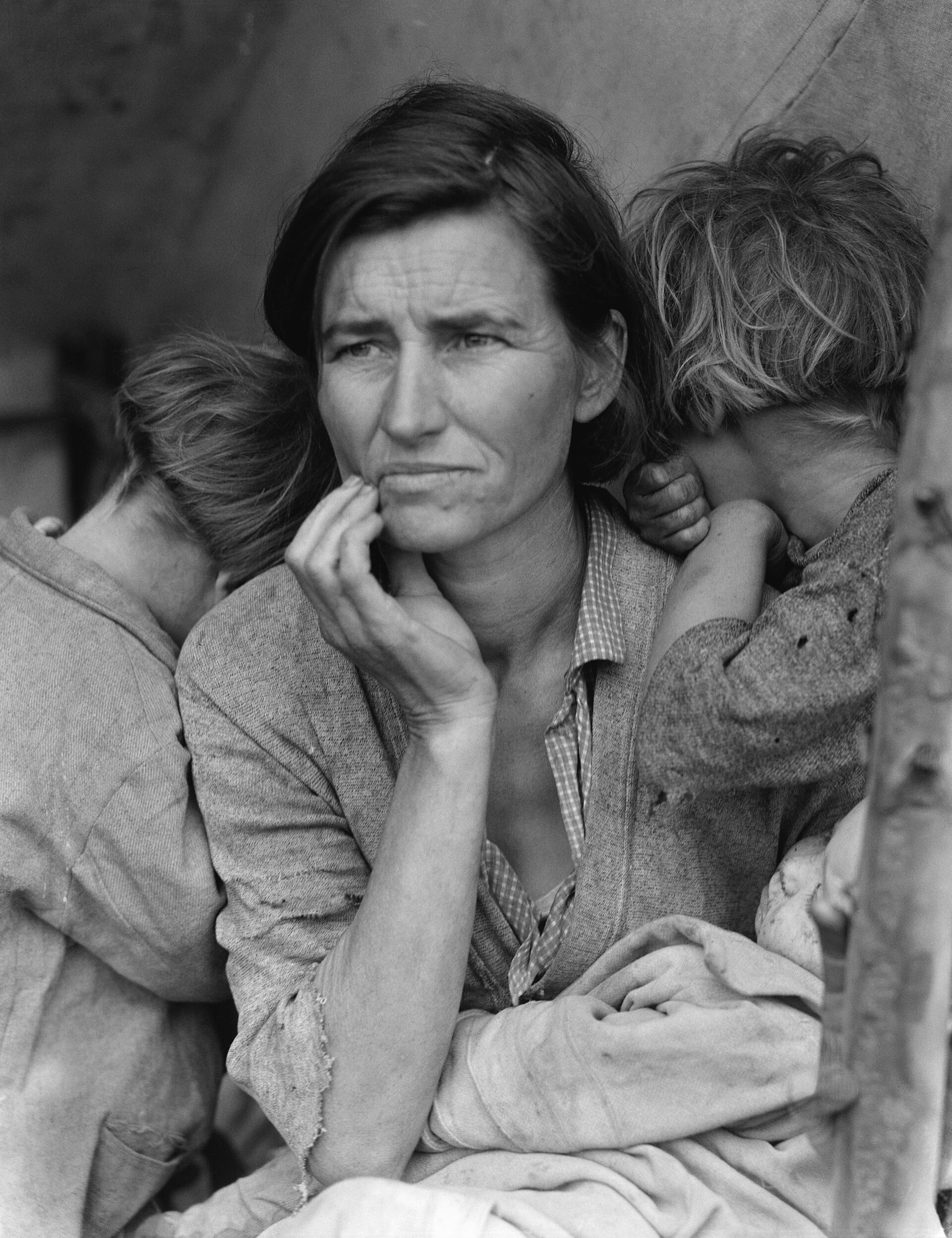 Continue reading · What happened next?The Most Famous Photograph of the Depression Took Ten Minutes to MakeDorothea Lange stopped at a pea-pickers' camp, shot five frames and drove on. The woman in the picture spent the rest of her life objecting to how it was used.
Nobody believed it for five years
The photograph did not settle the argument at the time. The brothers sent a telegram home, a garbled version reached the press, and the story was widely ignored or ridiculed. Scientific American and much of the American press treated the claim as unproven for years, partly because the Wrights refused to demonstrate the machine publicly while they were negotiating patents and government contracts.
What ended the doubt was not this picture but a series of public flights in 1908, when Wilbur flew before crowds in France and Orville demonstrated the machine for the US Army. Only then did the 1903 photograph stop being a curiosity and start being a founding document.
A negative that nearly did not survive
The glass plate went back to Dayton undeveloped. The Wright family's negatives later sat through the 1913 Dayton flood, which damaged part of the collection. This plate survived, and the print made from it is now among the most reproduced photographs in the Library of Congress.
It is in the public domain, which is why it appears in every textbook. The picture that founded aviation iconography was made by a man on his first and only assignment — and it is one of a small group of photographs where the person holding the camera mattered less than the fact that a camera was there at all.
Image record & sources
- Photographer
- John T. Daniels
- Date made
- 17 December 1903
- Collection
- Library of Congress, Prints & Photographs Division
- Licence
- Public domain
- Attribution
- John T. Daniels / Library of Congress. Public domain.
- File checked
- Licence page for this exact file — verified 29 August 2026
References
Continue on these topics
Tags
About the author
Forgotten Frame Editorial Desk
Editorial team
The Forgotten Frame editorial desk researches photographic archives, checks the licence of every individual file we publish, and writes the verified context around each picture.